The Free State provincial government has poured more than R100 million to renovate the historic Old Ramkraal Prison Complex in Bloemfontein: yet the site remains abandoned and increasingly lawless.
Originally constructed in the 1800s to combat rising crime, Ramkraal has now become the opposite of what it was intended to be.
The derelict complex is a refuge for homeless people, a hotspot for cable theft, and, according to local authorities, a haven for criminal gangs who freely move through the empty buildings.
Despite repeated promises to convert Ramkraal into a provincial legislature precinct, the multimillion-rand project has stalled for years, leaving a once-strategic security facility to deteriorate into a symbol of government waste and decay.
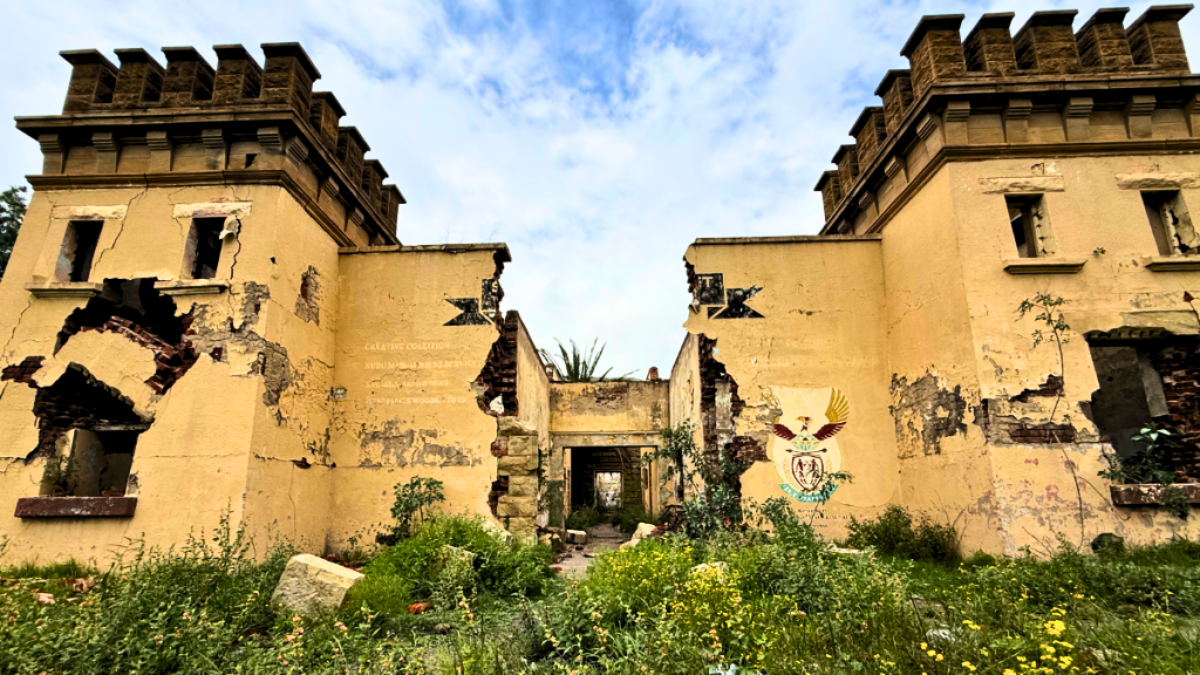
Upon a recent visit, the best way to describe it is that it resembles a half-demolished ghost town. Many walls have crumbled, the roof has collapsed, and vegetation is overgrown.
Squatters have reclaimed old holding cells, and fires have scorched their walls. The interiors have been stripped of all valuable materials.
Despite millions allocated for security measures, such as security fencing, it has either been stolen or was not installed.
The Ramkraal Prison, also known as the Old Prison or Ou Tronk, was built in Bloemfontein between 1893 and 1895 in response to a growing crime rate associated with the introduction of the railway line.
The new Ramkraal Prison, built in a Vitcorian style for £16,000, centralised Bloemfontein’s prosecutions.
It continued to be used as a prison until the tail-end of apartheid. The prison was officially registered as a national monument on 13 July 1990 and used for other purposes.
However, the heritage site was neglected and illegally occupied in the early 2010s.


The “restoration”
In 2012, the Free State provincial government, led by then-Premier Ace Magashule, proposed constructing a new legislature on the Ramkraal site.
The plan involved transforming the existing prison into a museum, as the current legislature was deemed too small for modern needs.
An initial allocation of R131.2 million was made to the Department of Public Works (DPW) over the Medium Term Expenditure Framework (MTEF), later reduced to R119.2 million during the 2012–2013 financial year to facilitate the project.
According to an unsigned feasibility report dated 3 August 2012, the total estimated cost of the Ramkraal development was R645 million, which is beyond DPW’s budget.
The project was eventually halted amid serious irregularities and compliance failures.
In 2016, the Free State Legislature instead entered into a multimillion-rand long-term lease for office accommodation.


Investigations into the millions spent
Concerns over the project’s stagnation grew early on. In 2013, the DA in the Free State asked then-Speaker Ouma Tsopo to investigate.
After initial resistance, an ad hoc committee was formed and ultimately recommended referring the matter to law-enforcement agencies.
On 12 February 2018, the Free State MEC for Finance requested that the Auditor-General of South Africa (AGSA) conduct a special audit of the project’s procurement and financial management.
When the findings were released in 2022, they revealed extensive irregularities and non-compliance.
The AGSA found that R106.7 million had been spent between 2010/11 and 2013/14 with no visible progress on site.
Of this, R99 million was deemed irregular expenditure, largely directed to feasibility studies, contractors and consultancy work.
The project’s estimated cost—used to justify consultant payments—had been inflated by 49% without approval from the Department of Public Works.
Transaction advisory services accounted for R17.1 million in irregular spending, and one consultant was overpaid by R506,817.
The phase-one contractor received R7.2 million, exceeding the contract price by R729,794, for demolitions and fencing that auditors later could not find evidence of.
The audit also concluded that the entire initiative lacked proper authorisation, with no approval from the provincial legislature, no project evaluation, and no approved funding model.
The DA’s 2018 submission to the Zondo Commission highlighted similar concerns, including:
- The project was never approved by the Free State Government or Legislature.
- The site had not been transferred by the National Department of Public Works, suggesting the province may never have intended to proceed with the development.
- No feasibility study was conducted before R61 million was spent.
- Consultants were appointed through deviations that did not meet required criteria.
- No service-level agreements existed between the Department of Public Works and consultants.
- Professional fees escalated alongside inflated project costs, while the AG could find no evidence of a procurement plan despite R2.5 million being paid for one.
- A company unqualified for the work was appointed to demolish buildings and erect fencing valued at R6.47 million.
- Demolition began before the required heritage permit was issued.
- An estimated R107 million had been spent with nothing on the ground to show for it.
In February 2024, the Special Investigating Unit (SIU) was authorised to investigate “allegations of serious maladministration, fraud and corruption” in the multimillion-rand project.
“The SIU will also investigate payments made in a manner that was not fair, competitive, transparent, equitable or cost-effective; or contrary to applicable legislation, and any related unauthorised, irregular, or fruitless and wasteful expenditure incurred,” it said.
“In addition to investigating maladministration, malpractice, corruption and fraud, the SIU will identify system failures and make systematic recommendations to improve measures to prevent future losses.”
Other images of the Old Ramkraal Prison in 2025


#R100 #million #taxpayer #money #spent #show #Newsday