The EthicsLab at the University of Cape Town is inviting scholars, artists, and practitioners to join a growing community that examines the ethical questions surrounding emerging health technologies through African perspectives.
Supported by Wellcome as a Research Development Programme, the initiative offers residencies, retreats, webinars, and catalyst grants to help build an intellectual community focused on critical and creative inquiry into technology and ethics.
The programme centers on a core question: What does technology ethics look like from an African perspective? Over the past two years, EthicsLab has become a hub for cross-disciplinary work examining the ethical, socio-political, and philosophical dimensions of technologies such as artificial intelligence, neuroscience, and genomics. Its goal is to show how African humanities can reshape global discussions on ethics and technological futures.
EthicsLab positions ethics not as a list of rules but as a way of thinking about how societies live well together and how technologies shape the conditions of life. The programme treats ethical inquiry as a practice of noticing what is at stake in technological systems—who benefits, who is excluded, and what forms of care or responsibility are prioritised.
“Ethics, for us, is not a checklist; it is a practice of worldmaking,” said Professor Jantina de Vries, director of EthicsLab. “It asks how our technologies and choices shape the worlds we inhabit and challenges us to imagine and create futures that are just, generous, and life-affirming.”
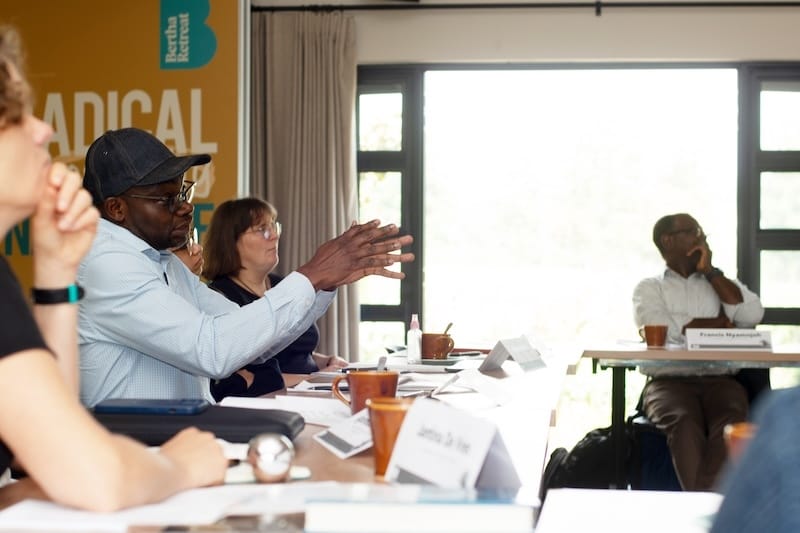
Two recent retreats illustrate this approach. A gathering on “AI as Worldmaking: Colonial Dimensions and Planetary Futures” brought together scholars from Africa and Latin America to examine the relationship between artificial intelligence and colonialism. Participants explored shared experiences of AI, planetary politics, and extractive technological systems, while identifying points of solidarity that could inform ethical and political resistance.
“By fostering critical dialogue between African scholars and other Global South thinkers, the EthicsLab advances the goal of re-centering African knowledge within global AI discourse,” said Dr. Yousif Hassan of the University of Michigan. He added that the programme positions African intellectual traditions as essential to discussions on AI governance and ethics.
Another retreat, “AI and the Imagination,” convened literary scholars, artists, and writers to examine how AI shifts ideas of creativity, originality, and authorship. Participants explored how ethics emerges within imagination and artistic practice, rather than as an external set of rules applied afterward.
“I have appreciated the creative and curious energy that animates the EthicsLab,” said Dr. Mapule Mohulatsi, a lecturer in English Literary Studies at UCT. “Working with the team has been liberating, especially in thinking about imagination and ethics in relation to AI and what these mean for people in Africa and the Global South.”
The programme offers several routes for participation: academic retreats, research residencies, catalyst grants, and webinar speaking opportunities. Each avenue encourages interdisciplinary collaboration and long-term engagement with the ethical questions raised by emerging technologies.
Applications are open on a rolling basis through Sept. 30, 2026. Submissions will be reviewed as they are received.
#UCTs #EthicsLab #Invites #Scholars #Shape #African #Perspectives #Technology #Ethics