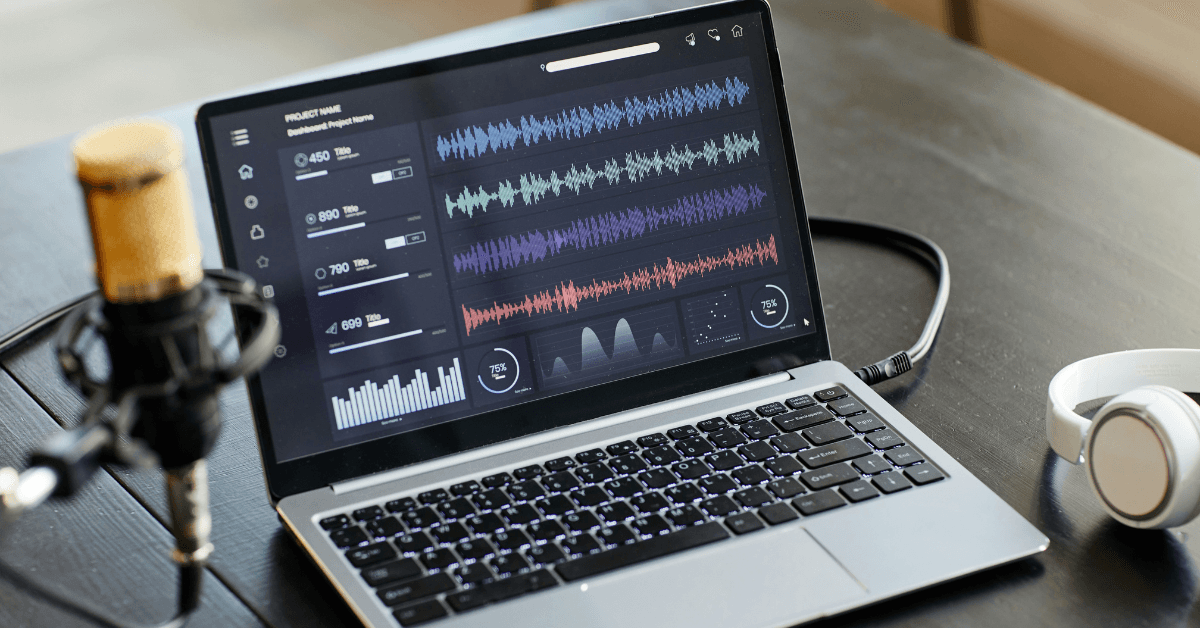
Artificial intelligence is rapidly reshaping how music is made. With platforms such as SUNO and Udio, it now takes only seconds to generate melodies, lyrics or even full songs. What once required studio time, musicians and long creative sessions can now be produced with a few prompts.
For South African artists, this shift is both exciting and unsettling. While AI opens new creative possibilities, it also raises unresolved legal questions: if a machine helps write a song, who owns it? And what happens when copyright law hasn’t kept pace?
AI as a creative partner
AI tools can speed up the creative process by offering chord progressions, melodic ideas or draft lyrics. For independent musicians, it can feel like having an always-available collaborator.
But AI doesn’t create in the human sense. It analyses existing music, identifies patterns and generates new material based on that data. What it lacks is lived experience, emotion and intention. It can assist with ideas — but it cannot tell a story rooted in personal or cultural memory.
Copyright law and the limits of authorship
South Africa’s Copyright Act of 1978 protects original works such as lyrics, compositions and recordings. But the law assumes a human author. It includes a category for “computer-generated works,” where the author is the person who made the arrangements for the work to be created. Historically this referred to programmers; today it increasingly includes artists guiding AI systems.
The key requirement, however, is originality, defined as the result of human skill and judgment. Music produced solely by a machine does not meet that standard. This leaves fully AI-generated songs in a legal grey area.
When humans lead the creative process
If an artist uses AI as a tool — writing prompts, selecting outputs, editing structure, adding vocals or instrumentation — they remain the author of the final work. In this case, the music can qualify for copyright protection and can be registered with bodies such as SAMRO or SAMPRA.
Here, AI functions no differently from a synthesizer, sample pack or production plugin. It supports the process without replacing human creativity.
When AI creates the entire song
If a song is generated entirely by AI with no meaningful human contribution, ownership becomes unclear. The risks include:
- The work may not qualify for copyright.
- The user cannot claim authorship under current law.
- Royalty collection may be impossible.
- Others may freely copy or distribute the music.
- The AI-generated output may unintentionally resemble an existing song, creating infringement risks.
Pressing “generate” does not guarantee ownership. For now, purely AI-created music sits in a legal and ethical vacuum.
Practical guidance for South African artists
Musicians using AI can reduce legal uncertainty by:
- Treating AI output as a draft.
- Adding significant creative input.
- Rewriting or personalizing AI-generated ideas.
- Recording original vocals or instruments.
- Keeping records of prompts, edits and revisions.
These steps help establish that the final work is the result of human authorship.
Globally, the legal landscape is unsettled. The United States does not allow copyright for fully AI-generated works. The UK and EU are still debating boundaries, and Asian markets are experimenting with hybrid models. No clear global consensus exists.
Will AI replace musicians?
Unlikely. AI may change how music is made, helping artists overcome creative blocks or experiment with new sounds. But it cannot replicate human emotion, cultural context or lived experience. It does not grow up in townships, sing in choirs or celebrate victories. Music is more than sound — it is identity, story and memory.
The bottom line
AI is here to stay. For South African musicians:
- AI-assisted music can be protected if human creativity is central.
- Fully AI-generated songs may not be owned by anyone.
- The safest approach is to use AI as a tool, not as the creator.
Technology may change the method, but the soul of music remains human.
#Transforming #Music #Creation #South #African #Copyright #Law #Isnt #Ready