Egypt is deploying drones, satellite monitoring, and artificial intelligence on a wide scale to improve water-management efficiency under the Second Generation Egyptian Irrigation System (2.0).
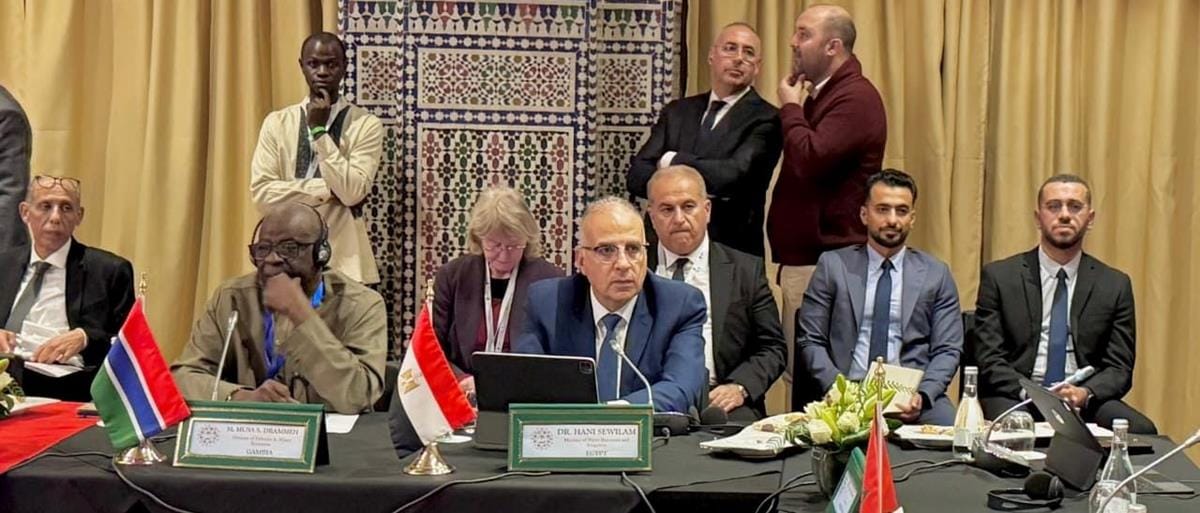
Minister of Water Resources and Irrigation Hani Sewilam said Tuesday, Dec. 2, 2025, during a ministerial roundtable at the 19th World Water Congress in Morocco that the ministry now uses advanced technologies to track aquatic weeds, monitor violations along waterways, analyze shoreline changes, and develop 3D models of hydraulic structures.
A ministry statement said AI-based forecasting tools help predict Nile River water levels and improve the distribution of water resources.
These tools operate within a digital platform that includes electronic groundwater licensing, national water databases, and integrated monitoring and maintenance systems covering more than 55,000 kilometers of canals and drains.
Speaking at a high-level session titled “Accelerating Action on SDG 6 in a Changing World,” Sewilam highlighted Egypt’s broader efforts to advance Sustainable Development Goal 6 (clean water and sanitation) amid rising water pressures that require more efficient and innovative management.
He said the Second-Generation Irrigation System provides a framework for improving water distribution, strengthening technical and engineering capacities, increasing transparency, addressing corruption, and enhancing monitoring and evaluation.
Sewilam outlined the system’s main components, including water treatment and desalination linked to food production, digital transformation, smart water management, infrastructure rehabilitation, climate adaptation, Nile regulation, governance, capacity-building, public awareness, and international cooperation.
He said the system is central to Egypt’s water security strategy, pointing to major expansion in treatment and reuse through projects such as Al-Mahsamma, Bahr El-Baqar, and New Delta. Together, these projects add about 4.80 billion cubic meters of water annually to the national balance.
Egypt is also studying the use of decentralized treatment units, applying modern irrigation methods in sandy areas, and expanding rainwater harvesting and flood-protection projects. These now total more than 1,600 structures to support climate resilience and agricultural productivity.
Sewilam said Egypt views the Second-Generation System as both a national tool and a model for other African countries. He said Egypt is ready to share knowledge and technologies with partner states.
He added that achieving SDG 6 requires stronger international cooperation, innovative and fair financing mechanisms, and a united African voice in shaping global water priorities.
#Egypt #Expands #Drone #Boost #Water #Management #Efficiency