A collaboration between the University of Cape Town’s Holistic Drug Discovery and Development Centre and AI partner Ersilia Open Source Initiative has produced a new computational pipeline designed to adapt malaria and tuberculosis treatment to Africa’s genetic diversity.
The research, published in Nature Communications, aims to improve drug safety and effectiveness by accounting for genetic variation that influences how medicines are metabolised. Africa is the most genetically diverse continent, yet this diversity is rarely reflected in global drug discovery and development, where most pharmacogenetic data is generated outside the continent.
Genetic differences can significantly affect drug response, influencing safety, efficacy and the risk of resistance. The lack of Africa-specific data has limited the ability to tailor dosing regimens to local populations.
To address this gap, the research team developed a computational approach that combines machine learning, artificial intelligence and pharmacometrics. The pipeline predicts which genes and African genetic variants influence the metabolism of malaria and TB drugs, enabling the estimation of dose adjustments suited to genetically diverse populations.
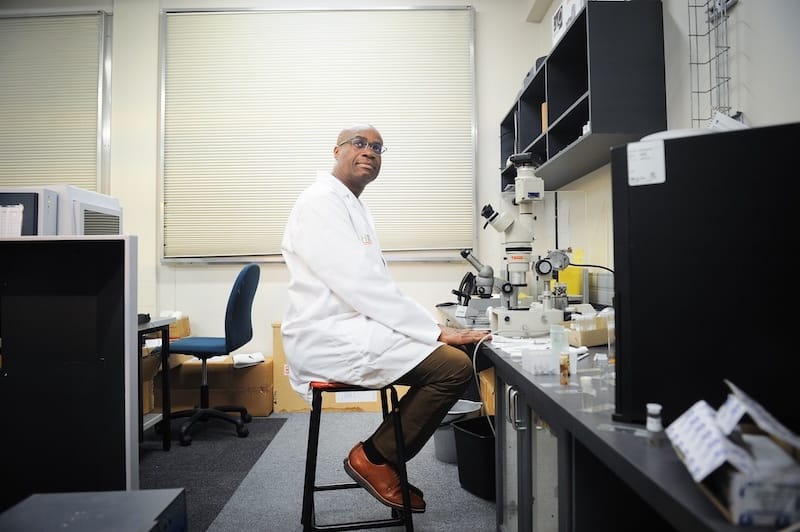
“This variability in drug response due to genetic differences is poorly characterised in African populations, with few tools available to predict its impact,” said Kelly Chibale, founder and director of the Holistic Drug Discovery and Development Centre. He said the issue must be addressed to reduce adverse events, improve treatment outcomes and limit the emergence of drug resistance.
Chibale, who holds the Neville Isdell Chair in African-centric Drug Discovery and Development, said the work reflects a broader commitment to developing solutions to health challenges affecting African populations.
The study, titled “Artificial Intelligence Coupled to Pharmacometrics Modelling to Tailor Malaria and Tuberculosis Treatment in Africa,” uses statistical and mathematical modelling to examine interactions between drugs, patients and disease. The centre provided modelling expertise to assess how African genetic variants may alter drug exposure, allowing predictions of optimal dosing for safety and efficacy.
Ersilia, a Barcelona-based nonprofit focused on open-source drug discovery for neglected diseases in the Global South, contributed the AI and machine learning capabilities. Its models were trained to predict interactions between genes and malaria and TB drugs by virtually screening genes that carry African variants.
Mutations in genes that encode drug-metabolising enzymes can cause people to process medicines at different rates. Slow metabolisers face higher risks of toxicity, while fast metabolisers may experience treatment failure or drug resistance due to insufficient drug levels. These effects are particularly significant for malaria and TB, which remain major causes of illness and death across Africa.
The next phase of the research will focus on improving predictive accuracy using new data sources. One project will study African-specific genetic variants using human liver microsomes from donors of African ancestry, a resource largely absent from current pharmaceutical research. Data generated from these experiments will be integrated into models to refine dose predictions.
The study’s co-authors include Gemma Turon, Mwila Mulubwa, Mathew Njoroge, Anna Montaner and Miquel Duran-Frigola.
#UCTLed #Research #Tailors #Malaria #Drug #Dosing #African #Genetics