As artificial intelligence increasingly influences decision-making in health care, its impact depends on how well it supports clinicians on the front lines.
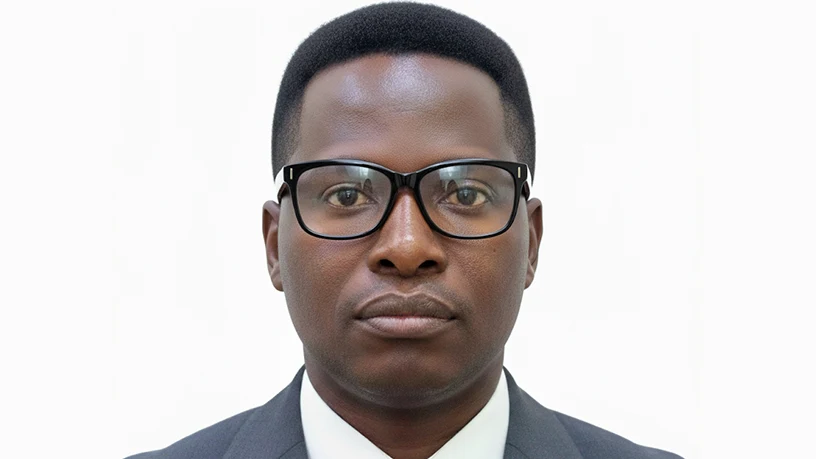
Sylvester Tafirenyika, an AI and machine-learning engineer, is focused on building tools designed to improve health care outcomes and reduce avoidable hospital readmissions. He has authored more than 28 peer-reviewed research papers, many focused on health care applications, and said his work is guided by the principle that AI should make health care safer, more efficient and easier for clinicians to manage.
Tafirenyika holds a master’s degree specializing in machine learning and artificial intelligence from a Silicon Valley-based university and has more than 15 years of experience spanning economics, analytics and applied AI. He now leads Silicon Valley startup RoyalTech AI Labs, which targets patients returning to hospital shortly after discharge.
His career began in Zimbabwe, where he earned a Bachelor of Science in economics with a focus on econometrics. He later worked as an economist at Allied Bank Zimbabwe Limited, developing forecasting models and analytical tools used to guide banking strategy and regulatory decisions. He said the role required precision, accountability and a strong understanding of how data shapes real-world outcomes.
As organizations adopted data-driven decision-making, he moved into analytics and later machine learning, expanding into predictive modeling, automation and intelligent systems.
Tafirenyika later worked in South Africa at Mandara Consulting, where he applied advanced analytics, machine learning and deep-learning techniques to business and public-sector challenges. He said the experience reinforced the need for AI systems that are practical, scalable and easy to adopt.
He said one challenge in health care technology is that much of the most valuable information is contained in free-text clinical notes rather than structured data fields. To address this, he focused on adapting advanced language models to better understand clinical language and help turn unstructured text into actionable insight.
At the center of his current work is a patented AI system designed to help hospitals reduce avoidable readmissions. The system analyzes hospital discharge notes to identify patients who may be at risk of returning within 30 days. It focuses on 10 leading conditions associated with hospital readmissions: heart disease, cancer, stroke, COPD, Alzheimer’s disease, diabetes, kidney disease, liver disease, respiratory infections and trauma.
The system is designed to protect patient privacy by operating entirely within a web browser, meaning sensitive medical data does not need to be sent to external servers.
Building on the patented technology, Tafirenyika co-founded RoyalTech AI Labs. The company’s flagship product, the Hospital Readmission Predictor, uses a medical-focused AI model to analyze discharge summaries and patient histories and estimate the likelihood of a patient returning to hospital within 30 days.
The platform supports clinicians with structured patient profiles, automated risk scoring, follow-up reminders, timestamped clinical notes and dashboards that track outcomes over time.
Tafirenyika said his approach to AI prioritizes privacy, reliability and clarity in health care environments where decisions carry serious consequences. He said he expects AI to increasingly support clinicians by identifying risks earlier, reducing administrative burden and allowing health care professionals to spend more time caring for patients.
#Engineer #Builds #Tools #Hospitals #Cut #Avoidable #Readmissions