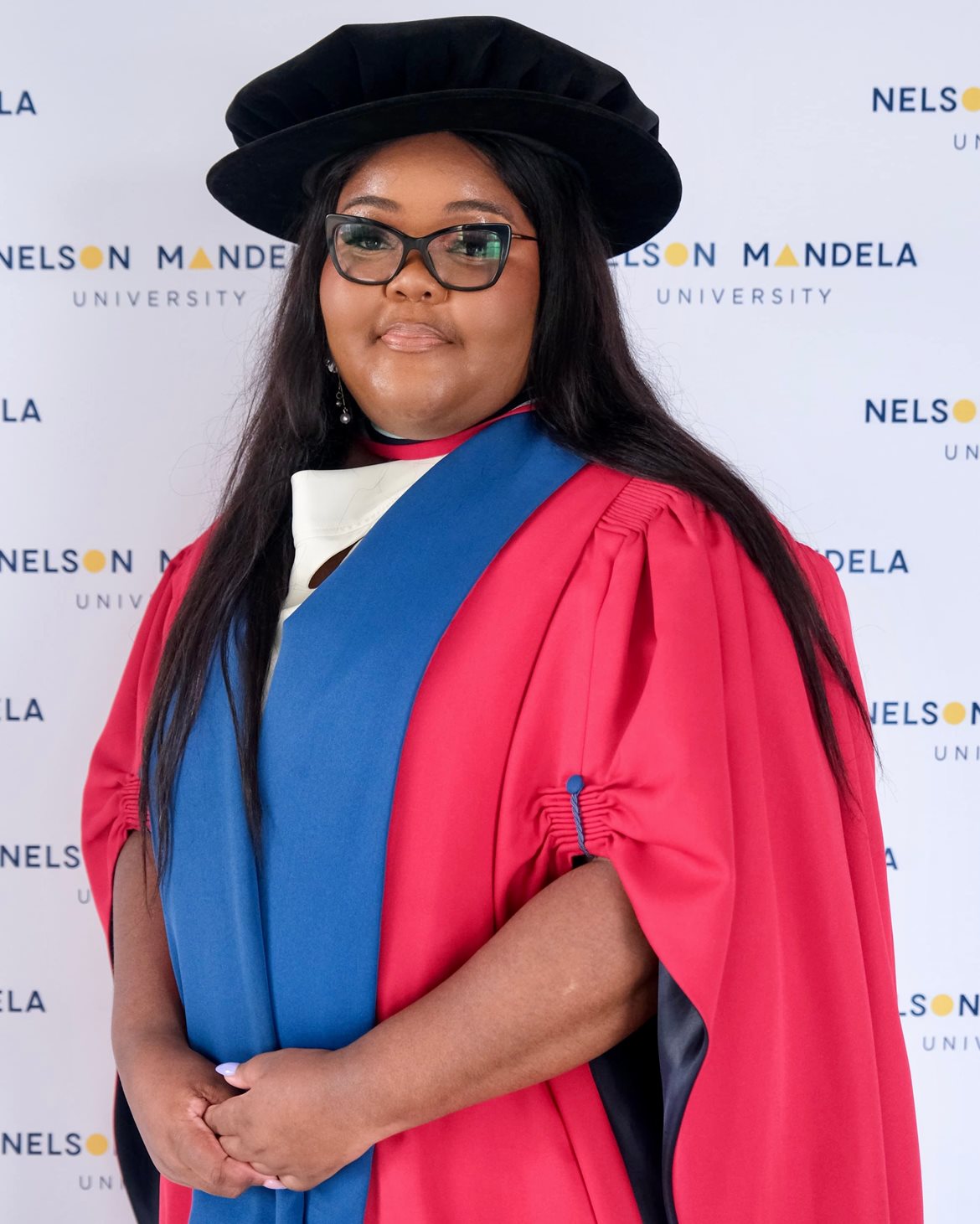
Research conducted through Nelson Mandela University has produced an artificial intelligence framework specifically designed to address the career guidance gap facing students at South Africa’s under-resourced universities — many of whom arrive having never received any professional career counseling.
Dr. Nosipho Mavuso, who lectures in information technology at Walter Sisulu University in Buffalo City, conducted the research firsthand at her institution. Focus group surveys of 180 undergraduate IT students revealed that generic online career tools failed them by ignoring South African realities, including affordability constraints, regional inequality and the digital divide.
“These tools are there but they are not designed for our context,” Mavuso said. “The gap is there, and quite visible.”
Her doctoral research, supervised by Nelson Mandela University Distinguished Professor Darelle van Greunen and co-supervised by Professor Norbert Jere of the University of Fort Hare, identified several stark barriers. Students at rural universities rarely had career discussions at school, universities do not effectively communicate available resources to students, and existing AI career tools are static rather than adaptive.
Van Greunen said the research was particularly important in the African context. “With diverse education systems, evolving labor markets and unequal access to resources across the continent, solutions designed elsewhere may not always reflect African needs,” she said. “Without context-specific research, AI systems risk relying on data and assumptions from high-income countries, potentially resulting in biased or unsuitable guidance for African learners.”
Students surveyed told Mavuso they needed career recommendations that reflected realistic, achievable options relevant to their circumstances — not systems designed in the United States or Europe that suggest careers unavailable in their provinces or requiring resources they do not have. South Africa’s digital divide means a student in Gauteng has vastly different access than one in the Eastern Cape or Limpopo, with cultural values and institutional limitations adding further complexity.
Mavuso also found students who had enrolled in IT qualifications simply because it was the only course they could access, with little understanding of what the career actually involved. “I’ve seen that students are really struggling, more especially at rural universities,” she said.
Her six-component framework addresses this by centering student backgrounds, institutional teaching capacity, AI-driven policies, curriculum design and stakeholder engagement. Unlike one-size-fits-all systems, it is designed to adapt to diverse student circumstances.
The research has practical applications for institutional policy and curriculum development, and could potentially be scaled into a digital career guidance tool for similar institutions across developing economies. Mavuso envisions the system supporting students from high school through university and says it could also help reduce dropout rates by ensuring students choose paths that align with their circumstances and goals.
She is currently exploring funding to develop a working prototype and says the study would need to be expanded beyond IT to other disciplines, including the humanities.
Van Greunen said the work reframes career guidance from a privilege of well-resourced schools into something all students can access, regardless of province or socioeconomic background.
#South #African #Researcher #Develops #Career #Guidance #Framework #Tailored #UnderResourced #Universities