Unconstitutional presidential term extension in Zimbabwe and the serious challenges that lie ahead for President Emerson Mnangagwa
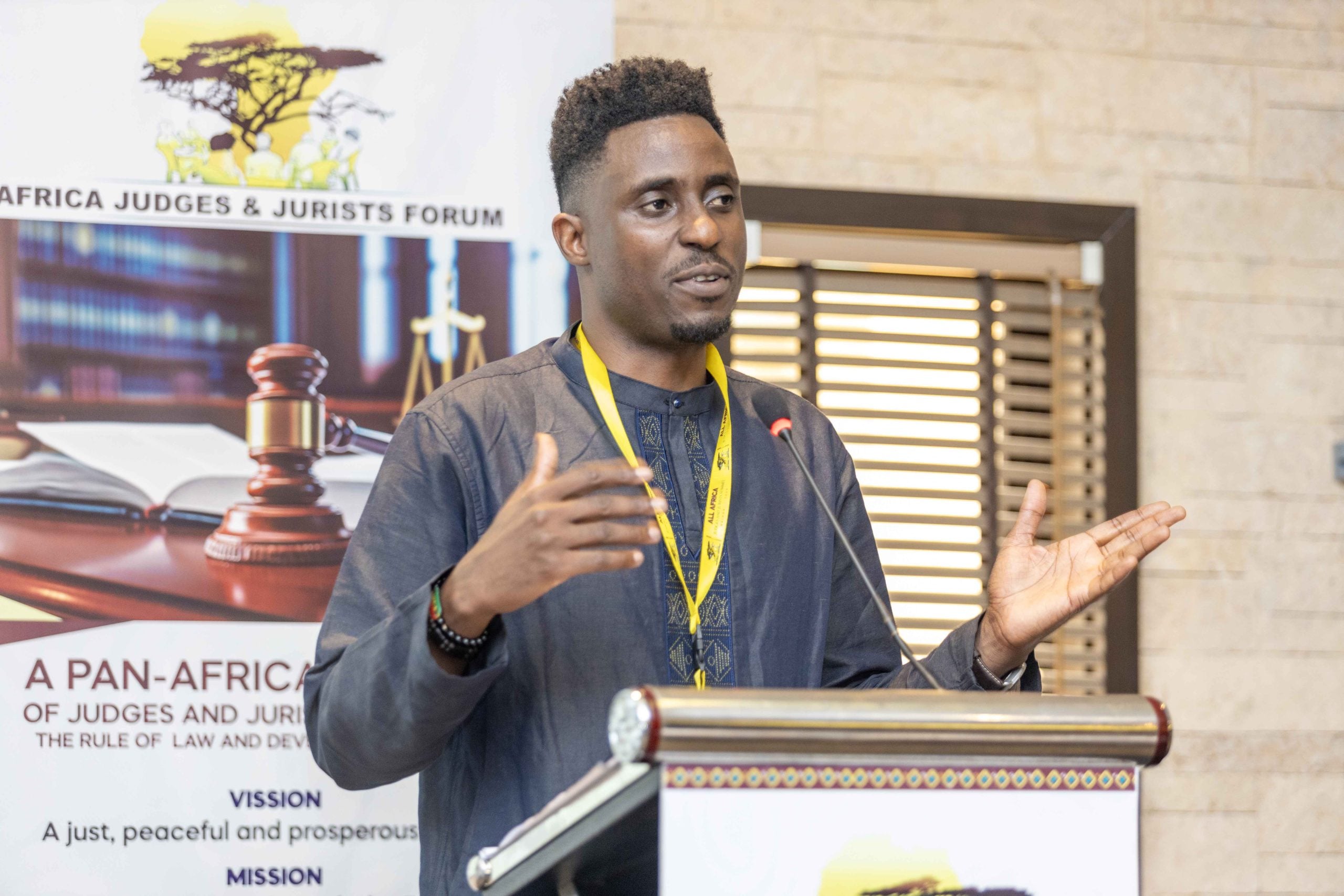
By Justice Alfred Mavedzenge
Introduction
In February 2026, the President of Zimbabwe, Emerson Mnangagwa chaired a cabinet meeting that approved a Bill proposing far-reaching constitutional amendments. Among the proposed changes is the extension of the term of office for both the incumbent President and incumbent Members of Parliament (MPs) by two years, increasing the presidential term from five to seven years. The Bill also proposes replacing the current system of direct presidential elections with a parliamentary method of electing the President.
Parliament has since gazetted the Bill and has invited public comments before MPs vote on it. It is widely expected that MPs will support the Bill, particularly because it seeks to extend their own tenure by two years, without the “trouble” of competing in elections. Under the current constitutional framework, both the President’s and MPs’ terms are due to come to an end in September 2028. However, if passed the proposed amendment would extend their terms to 2030, effectively postponing the 2028 general election.
Legally, any proposal to extend the terms of office for both the President and MPs must be subjected to a national referendum in which Zimbabweans vote either in favour of or against the proposed change. Even if voters were to approve the extension from five to seven years, the constitutional amendment cannot be applied to benefit incumbent office holders, including President Mnangagwa and the current MPs. This position is clearly outlined in section 328(7) of the Constitution of Zimbabwe and was explicitly affirmed by the Constitutional Court of Zimbabwe in Marx Mupungu v Minister of Justice (2021).
Earlier, in 2013, the Constitutional Court in Jealous Mawarire v Robert Mugabe and Others ruled that the term of MPs is strictly limited to five years. The term of office for MPs runs concurrently with that of the President and therefore, the President’s term and that of MPs cannot be lengthened without holding a referendum, according to the Constitution as interpreted by the Constitutional Court in the two aforementioned judgments.
Despite these constitutional provisions and clear judicial precedents, the government has indicated that it does not intend to hold national referenda on the matter. Instead, it maintains that Parliament should decide the proposed changes. While Parliament has invited public submissions, such input is not binding on MPs when they cast their votes.
Government claims that President Mnangagwa is so popular that the “people” have overwhelmly demanded that his presidential term be extended to give him additional time in office. Yet the same government refuses to test President Mnangagwa’s national popularity. The taste of the pudding is in the eating! As such, the only true test of President Mnangagwa’s popularity is by holding national referenda in which Zimbabweans are asked to vote whether they want to lengthen presidential terms and whether they want President Mnangagwa to stay beyond the end of his current term or not. After all, the Constitution demands that a presidential term cannot be extended without asking the people through a national referendum.
Serious challenges ahead
It is possible that President Mnangagwa and his government may proceed with amending the Constitution to extend their terms. However, doing so would likely trigger some serious challenges for the President and his government.
Catastrophic internal party factionalism
First, is that the amendment is likely to widen divisions within the ruling party ZANU PF and inspire new dimensions of internal factionalism. Unlike its sister movements in the region such as the African National Congress (ANC) in South Africa and Namibia’s South West Africa Peoples’ Organisation (SWAPO), ZANU PF’s perennial problem has been its inability to constructively manage internal succession processes. The party’s leadership has a toxic history of criminalising succession, and this often promotes internecine factionalism with severe ramifications on the country.
For example, under former President Mugabe, even when it was apparent that Mugabe was struggling with advanced old age, the party discouraged and punished leaders who expressed desire to succeed him. This created serious unrest within the party which destabilised the state and government. Consequently, President Mugabe was unable to focus on national development as he was pre-occupied with managing the unrest within his party. The implementation of national developmental policies also suffered due to internal sabotage. After decades of party unrest, the military intervened in November 2017, and President Mugabe was removed from power.
It seems that, under President Mnangagwa, ZANU PF is still yet to appreciate the significance of constructively and timeously managing leadership succession. At 83 years of age, President Mnangagwa is now old, and since his election in 2018 as President, the party knew that it needed to find a successor for him by 2028, due to presidential constitutional term limits. Yet the party never put in place a succession plan and instead punished those who expressed aspirations for party leadership. Just as it was under former President Mugabe, ZANU PF under President Mnangagwa has found itself in a succession quagmire, which they are now trying to firefight by tinkering with national constitutional term limits.
By extending President Mnangagwa’s term, some in the party hope to delay dealing with the succession nightmare, while some hope that it will give President Mnangagwa additional time to manage the succession process. This goal is likely to be unachievable.
Even if the extension of President Mnangagwa’s term succeeds to kill the succession aspirations of certain current protagonists in the party, it will not resolve the party’s succession problems. If there is anything to learn from ZANU PF’s history is that whenever one faction is vanquished, another more vicious faction emerges. For example, after decimating the Joyce Mujuru faction (known in Zimbabwe as the battle of “Gamatox” versus “Weevils”), the Emerson Mnangagwa’s “Lacoste” faction emerged to challenge Robert Mugabe’s “Generation 40” faction, and it proved to be more vicious than previous factions. After decimating the “Generation 40” faction, the “ED2030” faction has emerged. ZANU PF seems to be caught up in a vicious and unending cycle of succession factionalism, because of the failure by the party to deal with leadership succession openly. The Country and its national institutions, including the Constitution are perennial victims of this problem.
President Mnangagwa is said to be an experienced security and intelligence supremo capable of managing the succession process by sniffing out his internal competitors. But at the age of 85 when he starts his extended term in 2028, he may be too old to deal effectively with party internal unrest. The likely result is that the party will continue to be trapped in internecine factionalism and eventually may implode in ways that are similar to or worse than what happed to former President Robert Mugabe.
In addition to advanced age, President Mnangagwa’s situation post 2028 will be made more precarious by the fact that the “ED2030” faction that is misleading and backing him to overstay is a loose conglomerate of extremely ambitious politicians and business tycoons whose support for President Mnangagwa is not ideological driven but is driven by the political and commercial convenience of having President Mnangagwa staying in office but only for now.
It is no secret that the politicians in the “ED2030” faction have competing interests to succeed President Mnangagwa himself. Recent outbursts by Tempter Paul Tungwarara at a ZANU PF rally in which he castigated some of the party leaders within the “ED2030” faction for harbouring succession ambitions are just but a tip of the iceberg. Members of the “ED2030” faction lack cohesion because they are not coalescing around any ideology. They are coalescing around President Mnangagwa for material and political power. They are in a political marriage of convenience to outflank Vice President Chiwenga from succeeding President Mnangagwa. But as soon as that mission is achieved (if they do), they are likely to direct their political missiles towards each other and eventually towards President Mnangagwa, in the same way that happened to former President Mugabe.
After all, some of the proponents of President Mnangagwa’s term extension are his former sworn enemies and the jury is still out on their loyalty to Mnangagwa the man as opposed to Mnangagwa the President. They have a rich history of switching political sides whenever their individual political interests are in jeopardy. Furthermore, amongst those pushing for President Mnangagwa to stay beyond his term are business tycoons who have benefited commercially under his administration. Similarly, their support for President Mnangagwa is not ideologically unconditional. It is based on what they can get out of him. They are likely to ditch him when he is no longer able to benefit them. We have seen this happening to former President Mugabe when business tycoons who were once vocal in lobbying for him to stay in power quickly switched their allegiance to Emerson Mnangagwa when Mugabe was deposed.
Thus, the risk of worsening party unrest is high if President Mnangagwa stays in power beyond the end of his term in 2028, especially if he does so without following the laid down constitutional procedures. ZANU PF party leaders who are unhappy with President Mnangagwa will surely utilise and weaponise his lack of constitutional legitimacy for their political lobbying, to mobilise opposition against him and their message will likely find resonance with the wider Zimbabwean population, especially if President Mnangagwa’s government fails to deliver on the socio-economic front.
Notwithstanding the government’s claim that President Mnangagwa’s administration has been highly successful, 49% of the country’s population is living in extreme poverty, according to the World Bank. Corruption is extremely high, according to the Transparency International’s 2025 Corruption Perceptions Index. Zimbabwe’s external debt stands at USD12,7 billion and 50% of that debt is accumulated arrears which make it difficult for the country to access new international financing. These challenges are too complex and, going forward, they can only be resolved by a government whose leader enjoys undivided national and party support. If he decides to sign this Bill that seeks to illegally extend his stay beyond the end of his term in 2028, President Mnangagwa will certainly be leading a divided party and a divided nation. His government will likely spend more time firefighting internal and external challenges against his constitutional legitimacy and there will simply be no time for him to focus on resolving these complex national socio-economic developmental challenges. Former President Mugabe fell into similar predicament because he overstayed and lost both the support of his party and the country.
A potential migraine headache from geopolitics
In addition to these serious domestic socio-economic challenges, President Mnangagwa has to navigate the complex terrain of geo-politics. It will be very difficult for him to navigate geo-political dynamics when leading a divided party and his constitutional legitimacy is in question, after extending his term illegally and without popular support.
Perhaps some who are encouraging President Mnangagwa to extend his term may argue that ZANU PF has always survived legitimacy questions in the past and can do so now. In addition, others are arguing that the government of Zimbabwe is no longer facing international scrutiny and therefore, there will not be any repercussion if President Mnangagwa decides to overstay beyond his constitutional term. I address both arguments separately.
Constitutional illegitimacy is a unique challenge
While ZANU PF’s legitimacy as a governing party has been questioned before, those questions arose from electoral outcomes. Thus, ZANU PF has faced electoral legitimacy questions, and the argument was always that the party rigged elections. Questions of electoral legitimacy are relatively easier to address especially if there is no definitive quantitative evidence of election rigging in favour of ZANU PF. Constitutional illegitimacy is a completely different type of a problem. Unlike in the case of electoral illegitimacy, qualitative evidence is enough to prove constitutional illegitimacy both in the court of law and court of public opinion. The court of public opinion is more important in geo-politics.
There is damming and overwhelming qualitative evidence in the form of plain legal text and emphatic Constitutional Court rulings, which expose the constitutional illegitimacy of any plan to extend President Mnangagwa’s term without holding referenda. Section 328(1) and (7) of the Constitution of Zimbabwe explicitly prohibit extending the President’s term without Zimbabweans’ approval through referenda. Furthermore, the Constitutional Court has already affirmed this position explicitly in Marx Mupungu v Minister of Justice (2021) and indirectly in Jealous Mawarire v Robert Mugabe and Others- two court decisions which ZANU PF welcomed at the material time and therefore, cannot disown now. Should the court reverse its own ruling to accommodate an extension of the President’s term without a referendum, it would risk damaging its own credibility and legitimacy. If the President proceeds without referenda, he may be perceived as defying both the Constitution and the country’s highest court. Conversely, if the court reverses its position, the President may be seen as having exerted undue pressure on the judiciary. Either scenario would likely undermine President Mnangagwa’s constitutional legitimacy to remain in office beyond his tenure which is supposed to end in September 2028.
The brutal assault, death threats, and torture of civic and political leaders peacefully mobilising against the proposed amendments is further damning form of evidence. The gory and disturbing pictures of brutalised opposition leaders now widely circulated by local and international media, raise one pressing question: why suppress dissent if the proposal to extend the president’s term enjoys genuine popular support? The emergence of vigilante groups openly threatening violence against opponents of the amendments, alongside police bans on public meetings by critics while permitting gatherings by supporters, has further dented government’s claim that the Bill enjoys popular support. In light of such evidence, it will be difficult for President Mnangagwa to claim that his extended term is constitutionally and politically legitimate.
Another dilemma is that allegations of electoral illegitimacy are directed at ZANU PF as a party while allegations of constitutional illegitimacy are personal in nature. In the past, including in 2023, ZANU PF as a party stood to lose if the allegations of election rigging were not addressed. Because the allegations were that ZANU PF rigged general elections, the entire party felt obligated to set aside factional differences and unite to respond to those allegations as a collective. The allegations of constitutional illegitimacy will be directed at President Mnangagwa, because it is his legitimacy (rather than the party) that will be in question, if the president’s term is illegally extended. Thus, allegations of electoral illegitimacy tend to unite the party while allegations of individual constitutional illegitimacy may further divide the party. Given the divisions that have already rocked ZANU PF, it is likely that the party will compromise him when the pressure cooker heats up.
Thus, to the extent that there is overwhelming evidence in the form of a clearly framed legal text and existing case law prohibiting presidential term extension without holding national referenda, and to the extent that allegations of constitutional illegitimacy only require qualitative evidence to sway the court of public opinion, and considering that questions of constitutional illegitimacy concern the President himself rather than the party (as a collective), these allegations will be more difficult for President Mnangagwa to deal with than allegations of electoral illegitimacy which require quantitative evidence to sway the court of public opinion and which jeopardise the party (as a collective) if not addressed.
The uncertainties of geopolitics
While President Mnangagwa’s government has not faced serious challenges from the international community so far, there is no guarantee that the situation will remain like that. The global political terrain remains fluid and unpredictable. United States’ President Donal Trump-a key play in geo politics- with whom ZANU PF claims to have cordial relations is an unpredictable leader. There is no guarantee that he will remain firmly in office post the US mid term elections that are due in November 2026. Even if Donald Trump remains in office, his second and final term ends just when President Mnangagwa starts his extended term (in September 2028). The coming in of a new President in the United States, at a time when President Mnangagwa begins what would be widely perceived as a constitutionally illegitimate extended term, can be a source of geo-political problems for President Mnangagwa.
Currently, geo-political dynamics are shaping up in ways that increase the vulnerability of smaller but rich nations like Zimbabwe to foreign interference. The global political order has undergone significant shifts in recent years, particularly following Donald Trump’s return to the United States presidency. Donal Trump’s emphasis on Ronald Reagan’s “peace through strength” foreign policy doctrine signals a more transactional and unpredictable international environment.
Zimbabwe’s land reform programme remains a sensitive issue in diplomatic circles. At the same time, the global race for critical minerals places Zimbabwe in a strategically significant position. The recent construction of a large new United States embassy complex in Harare serves as a reminder of Zimbabwe’s continued geopolitical relevance, particularly to the United States of America. It may only be a matter of time before greater international scrutiny returns to Zimbabwe. It is best that when this happens, the government of Zimbabwe is found to be at peace with its own citizens and President Mnangagwa enjoys unanimous support within ZANU PF.
Recent global developments, including in Venezuela and Iran illustrate how domestic legitimacy crises can be leveraged and weaponised by powerful foreign states to advance their own selfish national interest. Zimbabwe could face similar vulnerabilities if its national leadership is perceived as governing without constitutional authority.
Governments that enjoy legitimacy and popular backing are better positioned to resist and ward off foreign interference and protect their own national interest. For example, recently, South Africa faced intense pressure from the United States over allegations of white genocide. Apart from the fact that the allegations are patently false, South Africa has been able to resist the pressure because the government of President Cyril Ramaphosa enjoys overwhelming support from the ANC and all the major political actors in the country, which include the opposition. This demonstrates the significance of national unity in resisting external interference. National unity is difficult to achieve when the national leadership is embroiled in allegations of constitutional illegitimacy, as is likely to be the case with President Mnangagwa if he illegally extends his term. If anything, problems of constitutional illegitimacy may weaken a government to give in to external pressure at the expense of protecting its own national interest. This is highly likely in a global environment of transactional diplomacy such as what we are observing internationally.
Conclusion
President Emerson Mnangagwa faces a pivotal choice. By respecting the Constitution and stepping down at the end of his term in September 2028, he would set a historic precedent as Zimbabwe’s first President to honour term limits and peacefully transfer power. Such a decision could elevate him to the status of a statesman, continuing to contribute to national and continental development, as former leaders such as President Thabo Mbeki (South Africa), President Jakaya Kikwete (Tanzania), President Khama Ian Khama (Botswana) and President Olusegun Obasanjo (Nigeria) have done.
However, if he proceeds to extend his term without adhering to constitutional procedures and securing popular consent, he risks the perception of a constitutionally and politically illegitimate President. That perception will certainly hound and expose both his administration and the country to heightened internal ZANU PF party unrest and vulnerability to the vagaries of present-day geopolitics.
Related
#Unconstitutional #presidential #term #extension #Zimbabwe #challenges #lie #ahead #President #Emerson #Mnangagwa #ZimEye