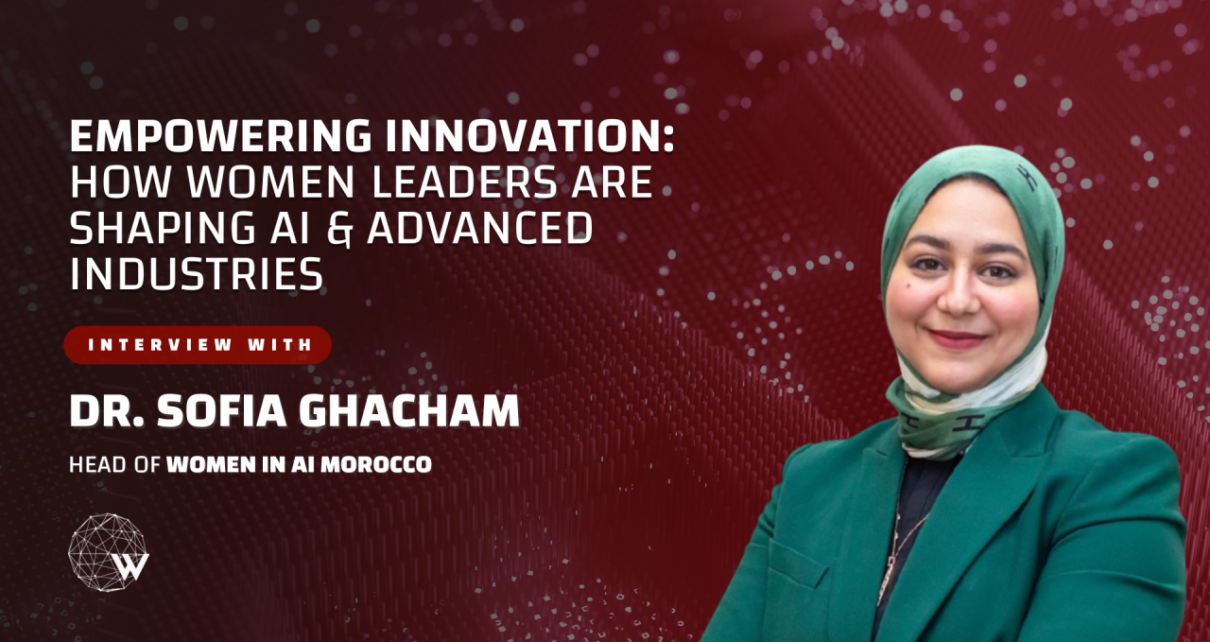
A Moroccan electrical engineer and ICT researcher who spent two decades working on mobile networks and railway systems is now making the case that artificial intelligence cannot reach its full potential without the full participation of women — and that Morocco, despite its academic promise, still has significant ground to cover.
Dr. Sofia Ghacham, founder of Women in AI Morocco, said her philosophy of technology is rooted in the practical demands of high-stakes, large-scale engineering. “Useful innovation is innovation that genuinely improves existing systems and responds to real societal needs,” she said, applying that standard to AI. “AI is a powerful tool that must be designed and deployed responsibly, securely, and in service of economic and social development.”
The spark for Women in AI Morocco came during her participation in TechWomen, a U.S. State Department program connecting women leaders in science, technology, engineering and mathematics with Silicon Valley’s tech ecosystem. The experience revealed the transformative power of organized community, visible role models and structured networks — none of which Ghacham felt were sufficiently present for women entering AI in Morocco. She founded the organization in 2025 as the country’s chapter of the international Women in AI network, with a three-part mission: raising awareness of AI opportunities among young talent, supporting women building careers in the field, and contributing to a more inclusive national AI ecosystem through cross-sector collaboration.
Morocco has strong female representation in scientific and engineering programs, Ghacham said, but that presence thins significantly as careers advance, particularly in research, technology entrepreneurship and AI leadership. “The challenge is to convert academic potential into stronger professional visibility,” she said, pointing to persistent stereotypes, a scarcity of role models and the absence of inclusive organizational policies as the structural barriers most in need of dismantling.
For Ghacham, inclusion is not a social obligation alongside the real work of AI development — it is the work itself. An ecosystem that excludes half its potential talent pool, she argued, will produce technologies that are less representative, less equitable and ultimately less competitive. “Integrating women fully into this ecosystem is not just a matter of equality,” she said. “It is an essential condition for building technologies that are fairer, more inclusive, and more representative of society.”
Her message to young Moroccan women considering a career in AI is direct: set no limits. “The world of AI evolves very quickly, and those who know how to learn, collaborate, and innovate will have a key role to play in building the technologies of tomorrow,” she said.
#Women #Morocco #Founder #Inclusion #Essential #Building #Technology