The rapid expansion of AI-powered mass surveillance systems across Africa is violating citizens’ right to privacy and having a chilling effect on civil society, according to a new report by the Institute of Development Studies co-authored by researchers from the African Digital Rights Network.
At least $2 billion has been spent by 11 African governments on Chinese-built surveillance technology that recognizes faces and monitors movements, the report found. National security is being used to justify implementing these systems with little regulation, the authors warn.
Chinese companies typically sell the technology in packages that include closed-circuit camera systems, facial recognition, biometric data collection and vehicle-tracking cameras, presenting them as tools to help rapidly urbanizing countries modernize their cities and reduce crime. Researchers said there is no real evidence the systems reduce crime and warned they allow governments to monitor human rights activists and political opponents, arrest protesters and create conditions in which journalists self-censor.
Nigeria has spent the most on surveillance infrastructure, investing $470 million on 10,000 smart cameras. Egypt has installed 6,000 cameras, while Algeria and Uganda each have approximately 5,000. Across the 11 countries surveyed, average spending was $240 million, with investment often financed through loans from Chinese banks.
Wairagala Wakabi, executive director of the Kampala-based policy body Cipesa and co-author of the report, said the surveillance systems cannot be justified on security grounds. “This large-scale and invasive AI-enabled surveillance of public spaces is not ‘legal, necessary or proportionate’ to the legitimate aim of providing security,” he said. “History shows us that this is the latest tool used by governments to invade the privacy of citizens and stifle freedom of movement and expression.”
Bulelani Jili, an assistant professor at Georgetown University, cautioned that even the introduction of legal frameworks regulating the technology could be dangerous, noting that surveillance of online activity has often been legalized through laws that end up criminalizing ordinary citizens for their posts. He said simply claiming systems had been regulated could allow governments to present them as legitimized. “The real challenge is not simply whether surveillance is regulated, but how societies negotiate the balance between security, accountability and civil liberties once these technologies become deeply institutionalised,” he said.
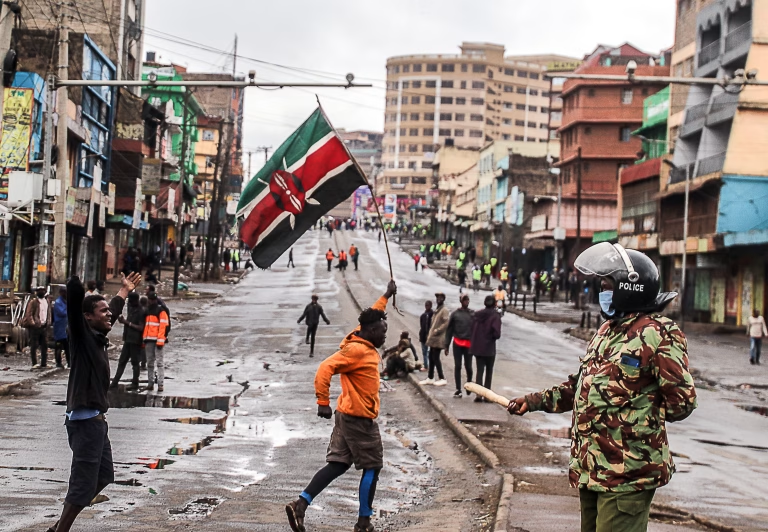
Jili pointed to concerns about facial recognition being used to monitor activists in Uganda and said surveillance systems were deployed during Gen Z-led protests in Kenya. Historically marginalized communities, political activists, journalists and minority groups face disproportionate risks when these technologies become embedded in policing and intelligence practices, he warned.
Yosr Jouini, who authored the report’s section on Algeria, said surveillance systems originally introduced as part of “smart city” projects promising to tackle crime and manage traffic had in practice become primarily tools of security forces. “The narrative is framed only through a security lens, which dismisses any other concern and does not provide enough mechanisms for citizens to ensure their rights are protected,” she said.
She noted that street protests in 2019 and 2021 played a significant role in Algerian political life but warned that expanded surveillance could make people hesitant to protest in the future. “We know a lot of protesters have been arrested when participating in public space gatherings,” she said. “We don’t know for sure if it was based on the cameras but there’s a chilling effect — because it could happen — on people’s willingness to participate in public gatherings.”
#Surveillance #Spending #Tops #Billion #African #Nations #Raising #Rights #Concerns