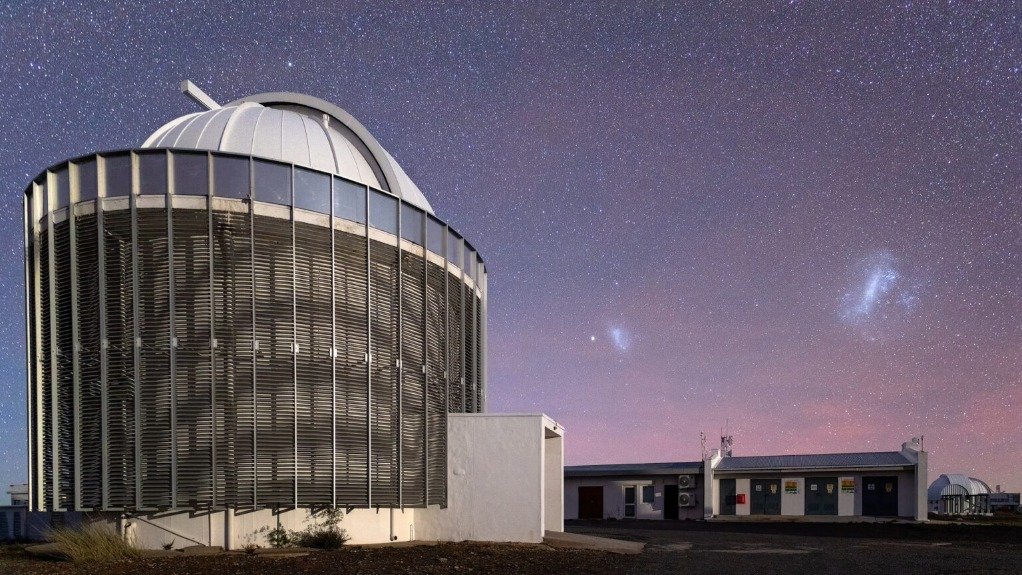
A collaboration between a leading British supercomputing center and South Africa’s national astronomical observatory is using artificial intelligence to automate telescope operations, process data in real time and capture fleeting cosmic events such as exploding stars as they occur.
The Science and Technology Facilities Council’s Hartree Centre and the South African Astronomical Observatory are jointly delivering the Intelligent Observatory program, funded through the UK Research and Innovation International Science Partnership Fund. The initiative brings together specialists in AI, software engineering and telescope operations to make observatory systems smarter and more autonomous.
Until now, much of the South African Astronomical Observatory’s work has relied on small teams manually checking systems and reviewing data — a process that becomes increasingly difficult to sustain as telescopes open to more astronomers. The program aims to change that by embedding AI into daily observatory operations.
The collaboration is developing three core tools: a connected monitoring system that alerts teams to potential equipment faults before downtime occurs; automated data-processing tools that convert raw observations into high-quality datasets corrected for atmospheric interference and instrument imperfections; and an AI-powered search platform that lets astronomers quickly locate logs and research papers without manually sifting through documents.
Dr. Adriano Agnello, principal AI researcher at the Hartree Centre and a former astronomer, said the program demonstrates how advanced AI can transform scientific discovery. “These tools mark a significant step forward in the application of AI to observatory operations, broadening access to major scientific facilities and supporting translational research that can also be applied in industrial settings,” he said.
The smart search platform, hosted at the Hartree Centre and built using large language models, is designed to give astronomers quick, reliable answers even during busy observing nights. In the next phase of the project, the team plans to incorporate documents from the Southern African Large Telescope and apply advanced techniques to further improve the platform’s capabilities.
Professor Stephen Potter, head of astronomy at the South African Astronomical Observatory, said the partnership represents a fundamental shift in how astronomical facilities operate. “Together, we are embedding advanced AI into the heart of our telescopes and data systems, building observatories that are not just automated, but truly intelligent,” he said. “This partnership strengthens South Africa’s leadership in innovative astronomy while creating powerful opportunities for students and researchers across Africa to engage with cutting-edge AI-driven science.”
The Hartree Centre, located at Daresbury Laboratory in the Liverpool City Region, is the United Kingdom’s leading supercomputing center dedicated to working with industry and the public sector. The Intelligent Observatory collaboration was initiated by Agnello and Dr. Rob Firth, both former astronomers now working as AI specialists at the center.
Beyond astronomy, organizers say observatories serve as effective testbeds for technologies applicable across industries including manufacturing, energy and transportation — from smart sensor systems to predictive maintenance and automated data processing. The program also aims to lower barriers to AI and data science education, giving students at historically disadvantaged institutions hands-on experience with cutting-edge tools.
#South #Africa #Team #Build #AIPowered #Intelligent #Observatory #Smarter #Astronomy