Will Iran Open the Strait of Hormuz—and What If It Doesn’t?
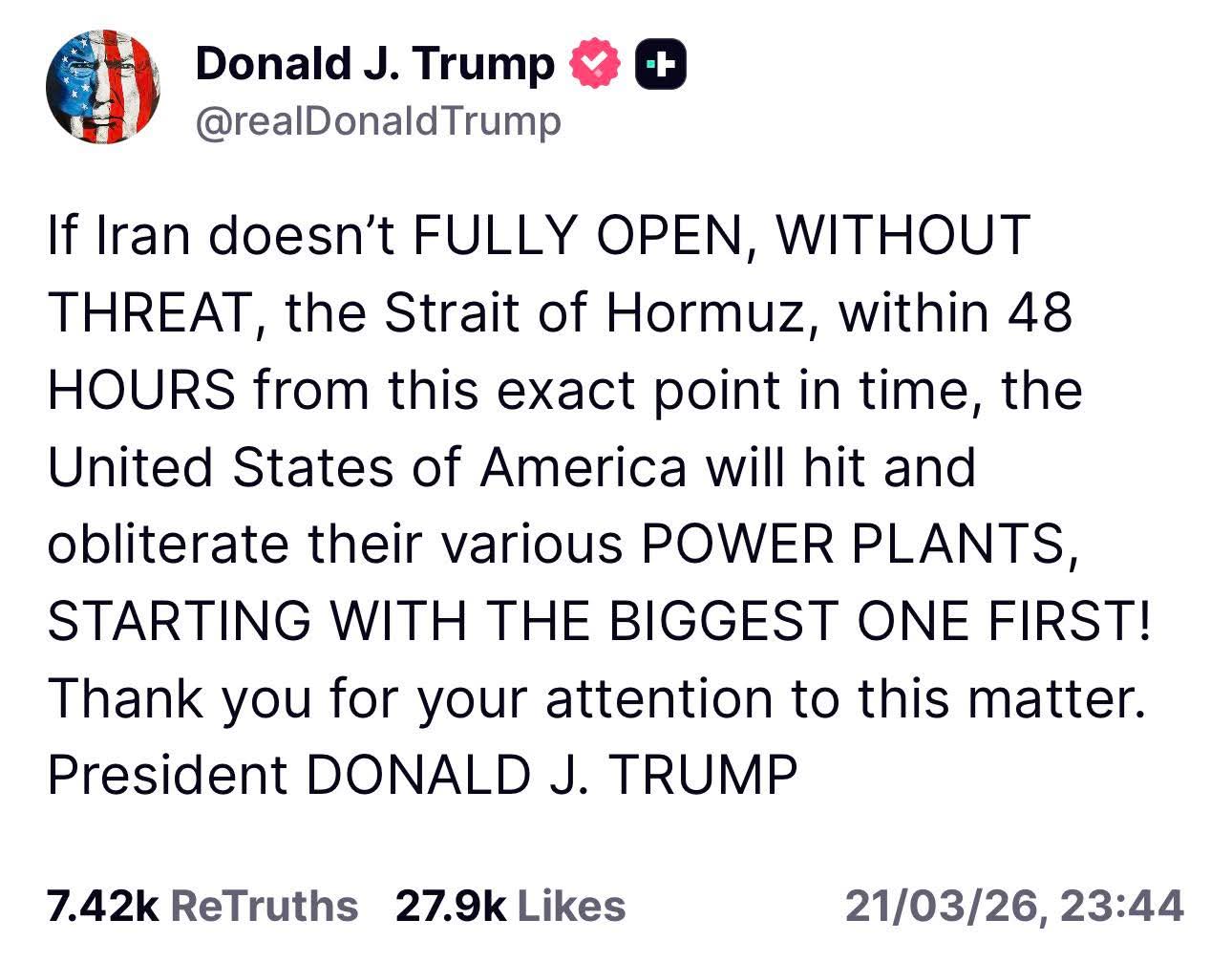
By Farai D Hove | Analysis | The current standoff over the Strait of Hormuz has rapidly escalated into one of the most dangerous geopolitical flashpoints in years, following a 48-hour ultimatum issued by Donald Trump threatening to strike Iran’s power infrastructure.
1) Is Iran Likely to Fully Open the Strait?
Short answer: Unlikely—at least not unconditionally
Recent reporting shows Iran is not fully closing the strait, but also not complying with US demands:

Iran says the strait is open only to “non-enemy” vessels and under its coordination
It has warned it could completely shut the strait if US strikes occur
Tehran insists the crisis stems from US-Israeli military actions, not its own policy
Strategic logic
Iran’s position reflects a calculated middle ground:
Not fully open → maintains leverage over global oil markets
Not fully closed (yet) → avoids triggering overwhelming military retaliation
This aligns with long-standing doctrine: Iran uses Hormuz as a pressure valve, not a first move.
Conclusion:
Iran is unlikely to “back down” purely out of fear of Trump’s threat. It will more likely:
Keep partial restrictions
Escalate if attacked
Use the strait as bargaining leverage
2) Why the Strait Matters So Much
Roughly 20% of global oil and LNG flows pass through Hormuz
It is the single most important oil chokepoint in the world
Even limited disruption has already pushed oil prices above $100 per barrel
3) What Happens If Iran Does NOT Open It?
A) Immediate Economic Shock
Already visible:
Oil prices surging past $100–$105+
European gas prices rising sharply
Fuel price increases globally (e.g. Sri Lanka +25%)
If fully closed:
Oil could spike toward $150+ per barrel (historical analyst projections)
Global inflation would surge
Central banks could delay or reverse rate cuts
Expect:
Higher petrol prices in the UK within days
Airline and shipping costs jumping
Supply chain disruptions similar to (or worse than) 2022 energy shocks
B) Global Recession Risk
A prolonged closure would likely:
Slow major economies (EU, China, India)
Hit manufacturing and transport sectors
Trigger stock market volatility
Energy shocks historically precede recessions, and this one is unusually concentrated.
C) Military Escalation
If Iran refuses to open the strait:
The US may attempt to force it open militarily
Naval escorts, airstrikes, or even occupation scenarios are being discussed
Iran has already warned:
It would target regional energy infrastructure
Potentially expand attacks across the Middle East
This risks:
A regional war across the Gulf
Attacks on oil facilities in Saudi Arabia, UAE, Qatar
Disruption far beyond Hormuz
D) Worst-Case Scenario: Systemic Energy Crisis
If escalation continues:
Simultaneous damage to production + transport routes
LNG shortages in Europe and Asia
Power outages in vulnerable regions
Iran has even warned of “irreversible damage” to regional infrastructure if attacked
4) The Strategic Reality
This is not just about a shipping lane—it’s about leverage:
Iran’s leverage: choke global energy supply
US leverage: destroy Iranian energy infrastructure
Global risk: both sides escalate simultaneously
Neither side benefits from full escalation—but both are signalling willingness.
Final Assessment
Will Iran open the strait fully?
→ Unlikely without concessions or de-escalation
What happens if it doesn’t?
→ Immediate oil shock → inflation → potential global recession → risk of wider war
Related
#Iran #Open #Strait #Hormuzand #Doesnt #ZimEye

