Empty Promises and Party Praise: Mnangagwa’s Meetings Draw Criticism Amid National Struggles
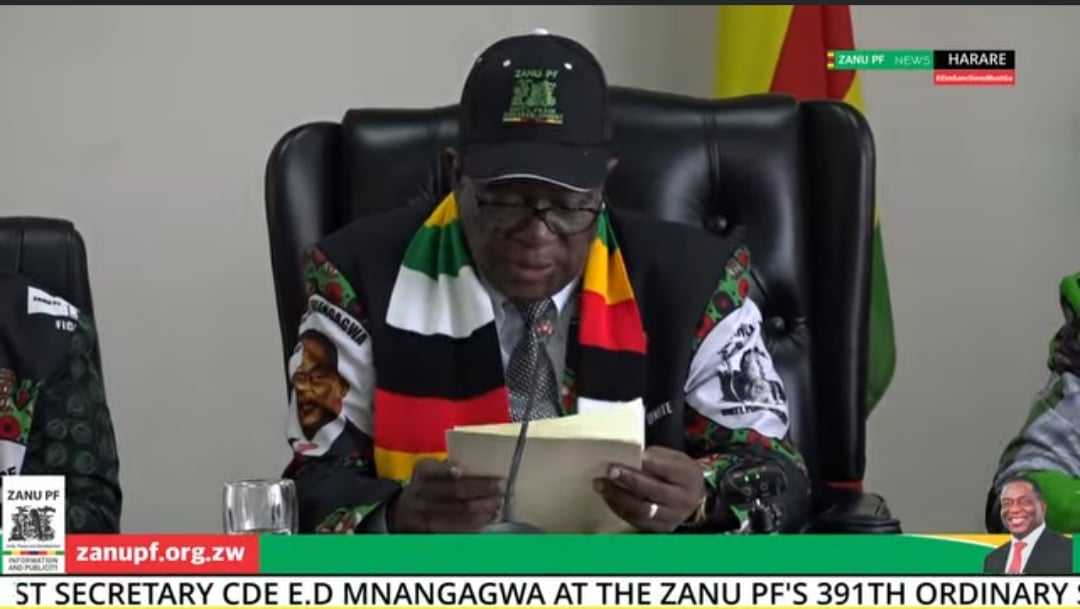
Tinashe Sambiri– President Emmerson Mnangagwa this week chaired both a Politburo session on Wednesday and a Central Committee meeting on Thursday at the ZANU-PF headquarters in Harare, but critics say the gatherings reflected more rhetoric than real solutions to the country’s deepening challenges.
Opening the 391st Ordinary Session of the Politburo, Mnangagwa framed the meeting as part of preparations for the upcoming Zimbabwe Independence Day celebrations, set to be held in Maphisa under the theme “ZIM@46-Unity and Development Towards Vision 2030.”
Despite ongoing economic hardships and public dissatisfaction, the President emphasized unity and long-term ambitions, stating that “unity of purpose should remain as a sound foundation for social development” and urging an “unwavering focus on realizing Vision 2030.”
However, observers argue that such messaging rings hollow for many citizens grappling with high costs of living and struggling public services.
Mnangagwa went on to praise internal party programmes, saying efforts to modernise structures were “strengthening party structures,” while also stressing the need to safeguard “the fundamental principles of Party supremacy in relation to Government”—a remark likely to raise concerns about the balance between state institutions and party control.
He called on party officials to be more active, urging committee chairpersons to “discharge their duties and present reports highlighting proposed policy matters for adoption,” but critics say similar calls have been made repeatedly with little visible change on the ground.
On the economy, Mnangagwa painted an optimistic picture, applauding what he described as “positive results from the agricultural sector” and expressing expectations of a strong harvest.
He added that government had approved a review of “licences, permits, levies and fees” to improve ease of doing business. Yet, many farmers and businesses continue to face structural challenges, raising doubts about the impact of such measures.
The President also highlighted efforts to ensure local beneficiation of mineral resources, claiming progress in maximizing national benefits. He further commended reforms in the public sector, pointing to the “implementation of the performance-based human resource system” as a sign of advancement.
In a rare acknowledgment of social concerns, Mnangagwa urged the Politburo to pay attention to public health institutions, describing them as “crucial for the wellness and well-being of our people.” Still, Zimbabwe’s healthcare system remains under strain, with shortages and underfunding widely reported.
He also pushed for intensified grassroots mobilisation, calling for “an aggressive and proactive approach” and emphasizing the importance of strengthening party structures at village level as the backbone of support.
On international affairs, Mnangagwa noted that Zimbabwe is monitoring tensions in the Middle East and has taken steps to protect energy supplies and essential goods. He also revealed ongoing diplomatic efforts to secure a non-permanent seat on the United Nations Security Council for 2027–2028.
Closing the meeting, Mnangagwa challenged party leaders to remain “focused, committed and results oriented,” insisting that improving citizens’ livelihoods must remain central.
Yet for many Zimbabweans, such declarations have become familiar—raising persistent questions about whether these high-level meetings translate into meaningful change or remain confined to political messaging
Related
#Mnangagwas #Meetings #Draw #Criticism #National #Struggles #ZimEye