ZANU-PF Power Structure Collapses as Patronage System Expands
By Shelton Muchena and Desmond Nleya| A single remark in Zimbabwe’s Parliament this week captured, with unusual clarity, the deeper currents reshaping the country’s political landscape.
When questioned about the ongoing nurses’ strike, Hurungwe MP Nomsa Chaimvura responded bluntly: “Hazvinei newe” “This has nothing to do with you.” In another context, it might have been dismissed as a moment of poor judgment. But in today’s Zimbabwe, it read differently: not as an aberration, but as a reflection of a political culture where accountability is increasingly sidelined and public scrutiny treated as an inconvenience rather than a democratic necessity.
To understand how such a moment becomes possible, one must look beyond the chamber and into the evolving structure of power within ZANU-PF, the party that has governed Zimbabwe since independence. Once anchored in liberation ideology and collective leadership, the party now appears to be undergoing a quieter but more consequential transformation away from institutional politics and toward a system shaped by proximity to authority and access to patronage.
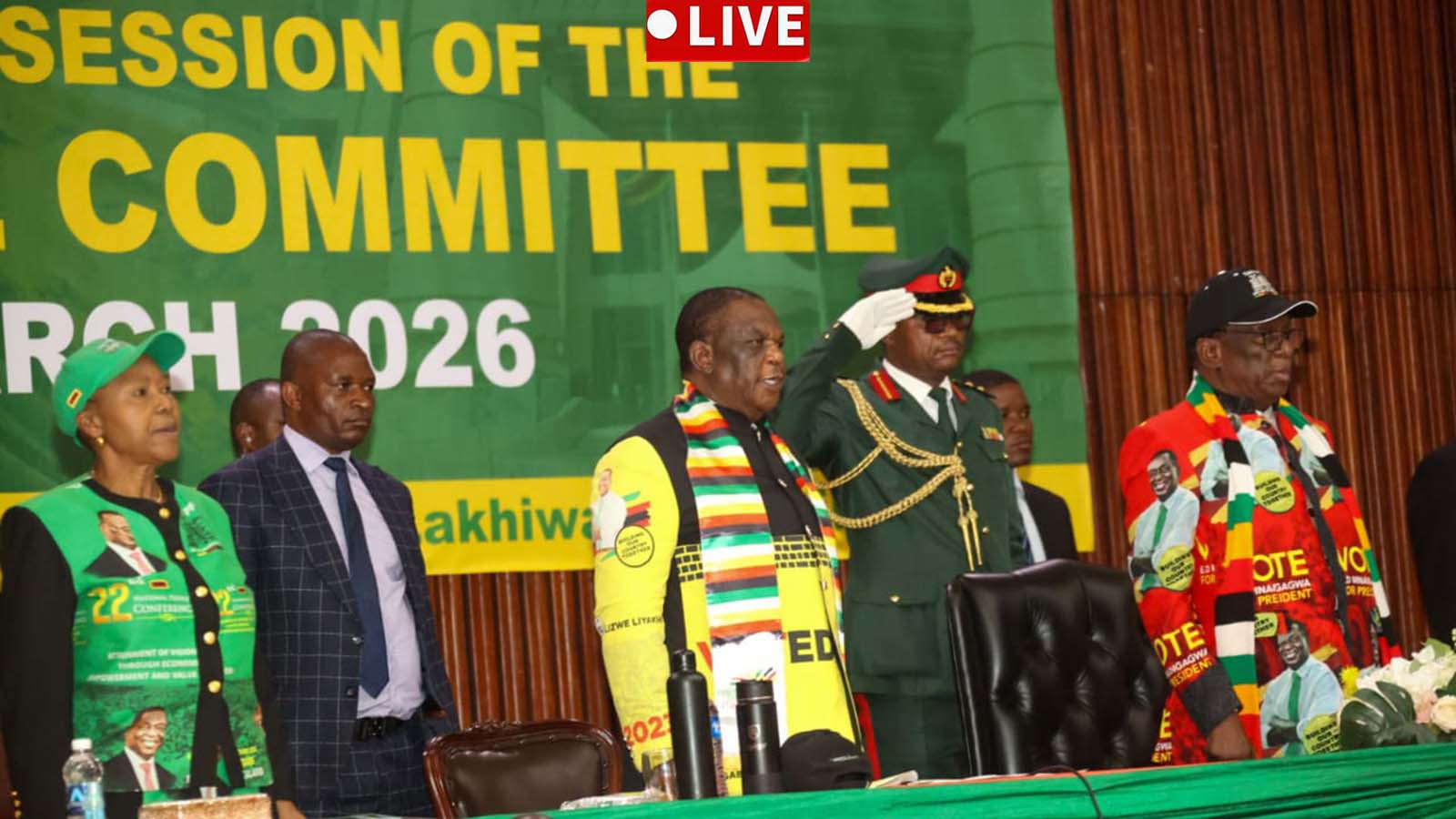
At the center of this shift is President Emmerson Mnangagwa, whose leadership has coincided with the rise of a network of politically connected affiliates. These actors, operating both within and alongside formal structures, have increasingly come to define how influence is exercised. Initially seen as extensions of party machinery, they now appear, to many observers, to function as an alternative power base one that often operates beyond the reach of traditional oversight.
The implications of this shift are visible not only in rhetoric, but in practice. Across the country, distributions of vehicles, cash, and basic goods have become a recurring feature of political life. Framed publicly as gestures of support or development, these acts raise persistent questions about the origins of such resources and the systems governing their allocation. In a state where public funds are expected to pass through formal budgeting, auditing, and parliamentary scrutiny, the growing prominence of informal distribution channels suggests a blurring of lines between state resources and personal political influence.
Equally significant is what this evolution has meant for ZANU-PF itself. The party that once derived its cohesion from shared ideology and historical mission now appears increasingly defined by loyalty networks. Internal dissent, once managed through debate and party processes, is now less visible, often replaced by quiet reshuffling or outright removal. The relative absence of figures such as Obert Mpofu from the current political forefront has only deepened speculation about the extent to which internal dynamics have shifted.
In this environment, authority flows less through institutions and more through alignment. The consequences are subtle but far-reaching: decision-making becomes centralized, accountability diffused, and governance increasingly opaque. For citizens, the result is a growing sense of distance from the mechanisms that shape their daily lives a perception that access and opportunity may depend less on policy than on political proximity.
Yet even as this system consolidates, it faces its own uncertainties. Zimbabwe approaches a future in which electoral processes, economic pressures, and public expectations will intersect in unpredictable ways. For ZANU-PF, the challenge is no longer simply maintaining power, but redefining its identity in a landscape where its traditional foundations ideology, structure, and collective leadership appear to be eroding.
What lies ahead will depend not only on political actors, but on whether institutional norms can reassert themselves. The restoration of clear boundaries between state and individual authority, the reactivation of parliamentary oversight, and the re-emergence of internal political debate are not abstract ideals they are the mechanisms through which durable governance is sustained.
The exchange in Parliament may have been brief, but its resonance is lasting. It offered a glimpse into a system in transition one where the language of dismissal risks replacing the language of accountability, and where the future of a ruling party becomes inseparable from the future of the state itself.
For Zimbabwe, the question is no longer whether change is occurring. It is whether that change will strengthen institutions or leave them further behind.
Related
#ZANUPF #Power #Structure #Collapses #Patronage #System #Expands #ZimEye