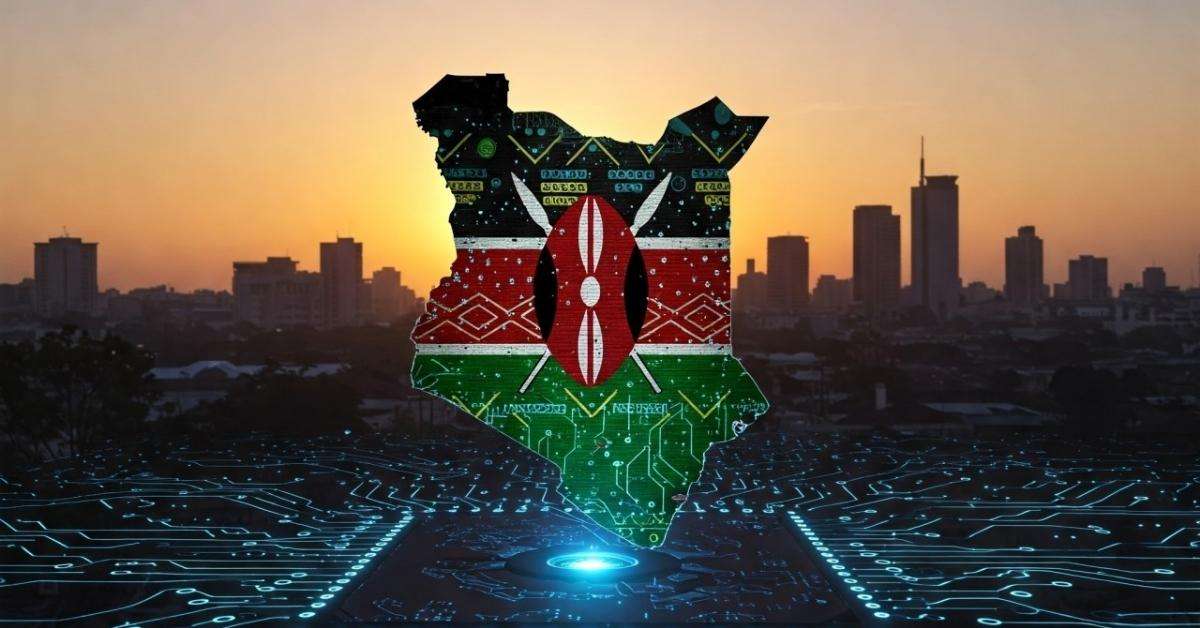
Kenya is making a strategic push to establish itself as Africa’s premier artificial intelligence investment destination, with government officials, investors and ecosystem leaders outlining a comprehensive approach at a high-level roundtable held during the Kenya International Investment Conference 2026 in Nairobi.
Organized by the Office of the Special Envoy on Technology and KenInvest in collaboration with the American Chamber of Commerce, the event centered on a full-stack approach to AI development spanning energy and computing infrastructure, data systems, research, applications, governance and talent.
A central argument made by participants is that Kenya’s predominantly renewable electricity grid gives it a competitive advantage that other global AI hubs — many grappling with power shortages — cannot easily replicate. That energy profile is already attracting capital: the region’s first hyperscaler deployment has secured $50 million in upfront risk funding, with between $250 million and $300 million earmarked for AI factory investments. Proposals to locate future data centers within special economic zones aligned with renewable energy planning further signal how Kenya intends to translate its energy position into bankable infrastructure.
Participants called for agile regulatory frameworks to match the infrastructure ambition, advocating for a 90-day regulatory sandbox that would allow innovators to test AI solutions under oversight without heavy-handed restrictions. Rather than creating new regulatory bodies, the roundtable recommended strengthening and upskilling existing ones.
A recurring theme was the distinction between building fragile “unicorn” startups and developing resilient, locally grounded technology ecosystems — described by participants as “camels” — designed for durability and tailored to African realities. This vision encompasses sovereign data centers, localized AI models accommodating local languages and bandwidth constraints, and interoperable digital public infrastructure referred to as the “Kenya Stack.”
Talent development emerged as a core pillar, with participants warning against overreliance on foreign expertise. Proposals ranged from aligning university curricula with industry needs and increasing AI literacy among public servants, to creating pathways for diaspora contribution through fellowships, residency arrangements and nomad visa programs.
Inclusivity also featured prominently. Drawing on models from India, participants suggested partnerships between telecommunications companies and AI firms to lower costs and broaden access, particularly among youth. Procurement reform was also proposed, with calls for the government to become an active buyer of locally developed AI solutions in health, agriculture and public services.
The roundtable, held under the Chatham House Rule, produced concrete outputs including an investment signals register, regulatory recommendations and a public KIICO 2026 statement outlining a roadmap for AI investment. Identified next steps include mapping Kenya’s long-term computing needs, producing a future-of-jobs report specific to the country, formalizing diaspora engagement frameworks and developing an investor’s guide to position Kenya in what participants called the “Age of Intelligence.”
#Kenya #Pitches #Renewable #Energy #Edge #Regulatory #Reform #Path #Africas #Hub