On a visit to Kenya, the foundation’s chief executive and Africa director described a strategic shift toward homegrown institutions, artificial intelligence, and women-centered development, even as traditional donor funding retreats.
This interview was conducted by Teresa Clarke, Executive Editor and Chairperson of Africa.com, on the sidelines of the Gates Foundation Partners Convening in Nairobi, Kenya.
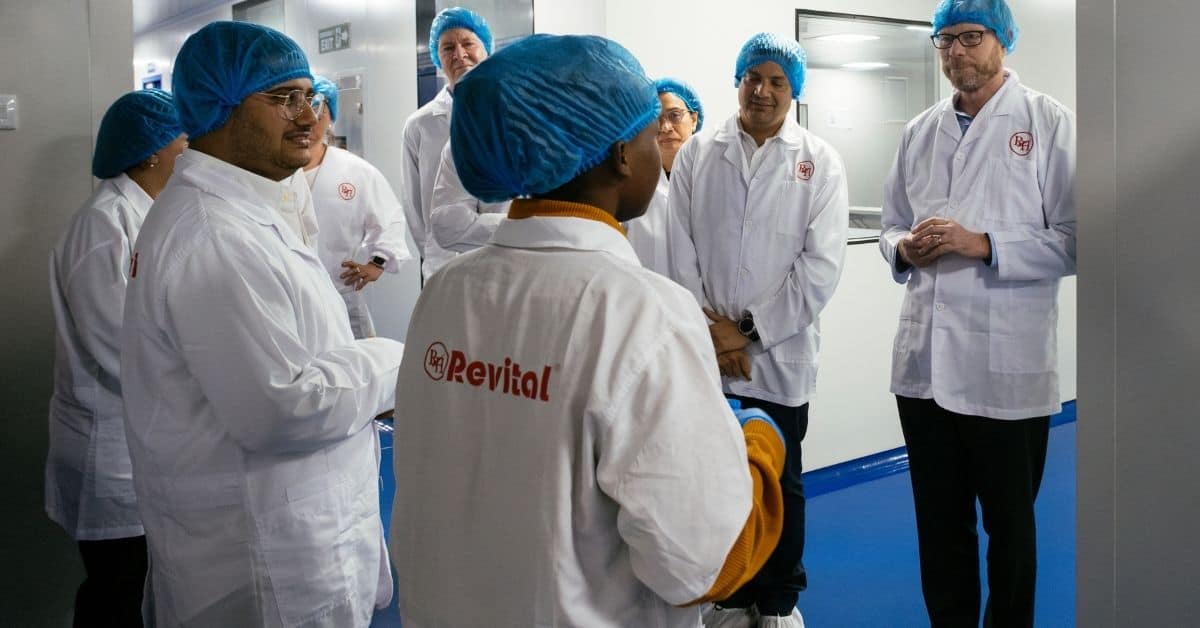
On a factory floor in Kilifi, along Kenya’s Indian Ocean coast, Mark Suzman found himself watching workers assemble syringes and reconsidering what the future of global health might look like.
The facility, run by a company called Revital Healthcare, was born out of crisis. When the COVID-19 pandemic triggered a global syringe shortage and Africa was being systematically shortchanged in vaccine supplies, the Gates Foundation partnered with Revital to accelerate production of World Health Organization pre-qualified syringes. The factory has since expanded to serve not just Kenya but the broader continent, diversifying into diagnostic tests and devices to help newborns with respiratory failure.
Suzman, the foundation’s chief executive, reflecting on the experience, said, “And to actually talk to the workers, see the factory, see the results — that’s a reminder of why we exist as the Gates Foundation.”
The visit to Kilifi was part of a broader convening in Nairobi that brought together hundreds of the foundation’s partners across Africa. Suzman was accompanied by Paulin Basinga, the foundation’s Africa director. Together, they described an organization in deliberate transition: one that is pushing decision-making closer to the communities it serves, expanding its use of artificial intelligence and digital tools, and racing to fill an enormous gap left by retreating Western donors.
A Strategic Shift in Research, Not Just for Africa, but for the World
For years, global development institutions have spoken the language of local ownership. The Gates Foundation, which has committed to spending down its endowment and closing by 2045, is now staking its legacy on whether that language translates into structural reality.
“We know that success or failure is going to be on the continent of Africa,” Suzman said. “We’re trying to build strong institutional partnerships that are going to outlive us.”
The foundation now operates five offices across the continent and has been deliberate about recruiting African talent at senior levels. But Basinga, who leads those operations, suggested the more profound shift is happening at a different level entirely, in the offices of government directors, away from ministers and governors.
“When you go sit with them and start to unpack the issue,” he said, “the amount of wisdom you learn from those people who are actually working in the community is huge. You are able to do exactly what you’ve been planning to do faster, better, and even cheaper.”
That insight was reinforced, he said, by a visit to the KEMRI-Wellcome Trust research facility in Kilifi, one of Africa’s most significant long-term health research institutions, where the foundation’s president of gender equality, Anita Zaidi, stood before nearly three decades of cohort data and acknowledged learning from research that had originated there.
“Africa is getting to a place,” Basinga said, “where research coming from Africa is forming global policies.”

AI, Digital Infrastructure, and Kenya’s Role
On technology, both executives were direct: artificial intelligence is going to reshape health and development, and the foundation is determined to ensure that Africa is not the last region to access it.
The foundation has already established AI hubs in Rwanda and Senegal and is in active discussions with Kenyan government partners to launch additional centers. Basinga also highlighted the foundation’s collaboration with Smart Africa — the African Union-mandated body coordinating digital strategy across the continent — to help develop a coordinated AI policy framework.
Kenya’s position as a leading test bed for this work is not accidental. The country’s infrastructure, talent base, and digital economy make it a natural hub. The foundation has invested in data analytics and modeling capacity at the University of Nairobi and sees Kenyatta University’s Center for AI as another node in the emerging ecosystem.
Suzman pointed to concrete applications already underway in agriculture: AI-enabled tools that provide smallholder farmers with localized weather prediction, soil health mapping, customized fertilizer and seed recommendations, market price transparency, and information on government support programs — increasingly available in Swahili and delivered via feature phone, not just smartphone.
“It’s the same quality of data you could get if you were a high-income farmer in the American Midwest,” Suzman said.
Education is a parallel frontier, with the foundation investing in AI-powered foundational literacy and numeracy tools for schoolchildren in local languages — with Kenya as one of its primary case studies.

The Chicken Farmers of Ethiopia and What They Taught the Foundation
One of the most instructive moments Suzman described did not involve artificial intelligence or digital infrastructure at all. It involved chickens.
During a trip to Ethiopia with Basinga, Suzman visited a research institute developing what the foundation calls “dual-purpose poultry,” drought-resistant chickens capable of producing more meat and eggs in challenging conditions. The animals move through a supply chain anchored almost entirely by women: female wholesalers who breed them, and female farmers who raise them.
“I didn’t realize that men really don’t like farming chickens very much,” Suzman said, with a note of candor, “so this is a route to actually seriously boost women’s income, which is a core goal for us.”
The foundation, which began its agricultural work in 2007 focused almost entirely on crops, has since significantly expanded its livestock portfolio as a result of encounters like this one. It is now exploring aquaculture as a new area in select countries.
Data on women’s economic agency, Basinga added, reinforces what the foundation keeps learning in the field. Women constitute between 40 and 60 percent of smallholder farmers across Africa, yet their yields run roughly 30 percent lower due to unequal access to land, financing, and agricultural inputs. A joint program with the Government of Kenya and the World Bank, called BRIDGE, is working to organize one million smallholder farmers into cooperatives with improved access to credit and inputs, with women at the center.
In Rwanda, Basinga noted, digitized land records are now allowing banks to assess farmers’ productivity and extend loans to women who lack traditional collateral.
The Aid Retreat and a Reckoning With Numbers
The conversation turned sharper when the subject shifted to global aid.
The closure of the United States Agency for International Development under the Trump administration sent a shock through the development sector, but Suzman was careful to describe it as an intensification of a wider trend rather than an isolated rupture. The United Kingdom, France, Germany, the Netherlands, and Norway have all reduced bilateral and multilateral commitments simultaneously.
This year the Global Fund and the GAVI Vaccine Alliance, both major recipients of Gates Foundation support, were described by Suzman as “broadly successful,” but raised less money than in previous cycles.
“You have a wider knock-on effect,” he said, “which has been a difficult moment for governments that were already struggling with debt challenges.”
African governments, he argued, are responding with a new seriousness about domestic revenue mobilization. Nigeria, for instance, has increased its non-oil tax base, though from a very low starting point. The foundation supports institutions like CABRI, the Collaborative Africa Budget Reform Initiative, which facilitates knowledge-sharing among African finance ministries.
But Suzman offered no illusions about the timeline. “When you actually crunch the numbers,” he said, “it’s going to take several years to really meet the kind of gap produced by the cuts in donor funding.”
The Human Dimension
Near the close of the conversation, both men were asked to speak directly to the people most affected by the foundation’s work: the farmers, mothers, and researchers across the continent who would never attend a partners’ convening in Nairobi.
Suzman’s answer was, “I don’t really need those people to know much about the Gates Foundation,” he said. “I need those people to have access to the opportunities, whether it’s education, whether it’s healthcare, whether it’s financial access. That’s what we care about.”
Basinga’s answer was personal, “Behind every mortality statistic is a human being who is suffering — and the Foundation’s job is to get close enough to those realities to find solutions that actually work.
No mother should lose a child just because of where they were born. He closed with these words, “We can feel their pain because it’s real. And we will do our best.”
#Gates #Foundation #Deepens #Africa #Commitment #Betting #Local #Institutions #Drive #Health #Economic #Outcomes