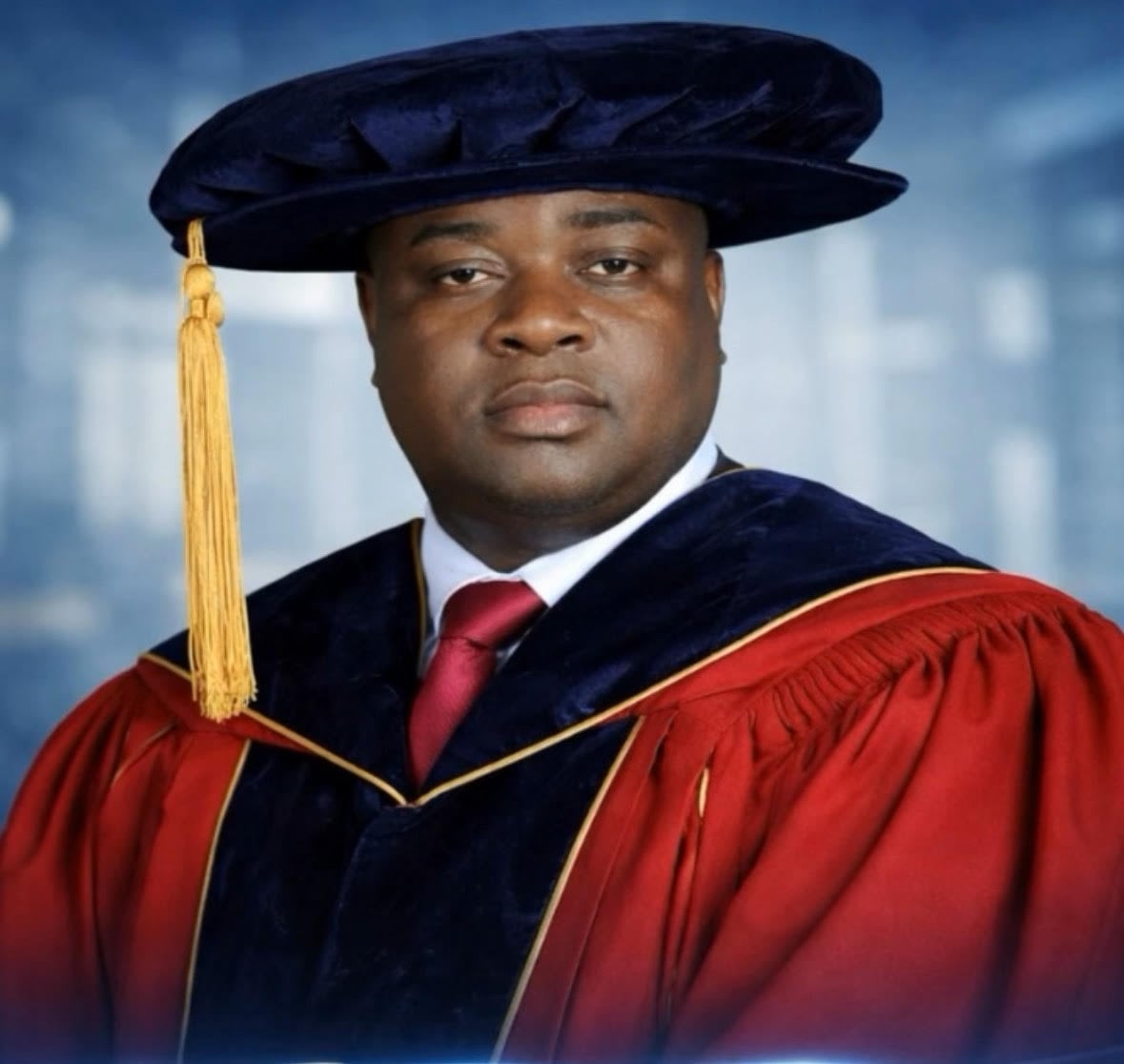
Proctor Nyemba’s PhD Under Scrutiny
By A Correspondent-As Zimbabwe seeks to restore integrity, credibility and global confidence in its higher education system, questions around the verification of academic qualifications—particularly those held by public figures—are once again coming into sharp focus.
At the centre of this debate is Zimbabwean corporate governance and forensic accounting practitioner Proctor Nyemba, whose academic credentials, including a reported PhD in forensic accounting from Copperstone University, are now attracting public attention.
Nyemba has built a visible profile in governance, consultancy and training circles, positioning himself as an expert in fraud examination and risk management. However, the current scrutiny is not about his professional work, but about the status, recognition and equivalence of the qualifications he claims.
Central to the debate is the standing of Copperstone University, the institution cited as having awarded his doctorate. While the university is registered in Zambia, questions have been raised in academic circles about how its qualifications are assessed in relation to Zimbabwe’s regulatory framework, particularly whether they meet the standards set by the Zimbabwe Council for Higher Education (ZIMCHE).
This brings into focus a broader and recurring issue in Zimbabwe: the use of qualifications from institutions whose accreditation and international recognition are not always clear. Over the years, the country has witnessed several high-profile cases in which bogus or questionable degrees held by politicians, public officials and celebrities have been exposed, challenged or in some instances rescinded, sparking national debate about academic integrity.
In this context, Nyemba’s case is less about the individual and more about the systemic need for verification and transparency. ZIMCHE, as the statutory body mandated to regulate higher education, is responsible for evaluating both local and foreign qualifications to ensure they meet national, regional and international standards.
Key questions that arise include:
- Are the qualifications awarded by Copperstone University recognised within Zimbabwe’s higher education framework?
- Do they meet the academic and quality assurance standards expected of doctoral degrees?
- Is the use of academic titles such as “PhD” and “Professor” consistent with Zimbabwe’s regulatory guidelines?
Importantly, raising these questions does not amount to an allegation of wrongdoing. Rather, it reflects the growing demand for due diligence in a sector where credibility is critical. In the absence of clear and transparent verification, speculation can undermine both individual reputations and public confidence in institutions.
Zimbabwe’s recent history with questionable academic qualifications has demonstrated the risks of leaving such matters unaddressed. When unverified credentials are used in influential spaces—whether in government, academia or business—the consequences can include weakened institutional trust, compromised decision-making and reputational damage at both national and international levels.
For this reason, analysts argue that there is a strong case for ZIMCHE to provide clarity—not only on this matter, but as part of a broader effort to strengthen oversight. A transparent verification process would help ensure that academic qualifications used in the public domain are credible, comparable and properly recognised.
Ultimately, the issue goes beyond one individual. It speaks to Zimbabwe’s ongoing effort to safeguard the integrity of its education system. In a knowledge-driven economy, academic titles must not only be earned—they must also be verifiable, credible and beyond reproach
Related
#Proctor #Nyembas #PhD #Scrutiny #ZimEye