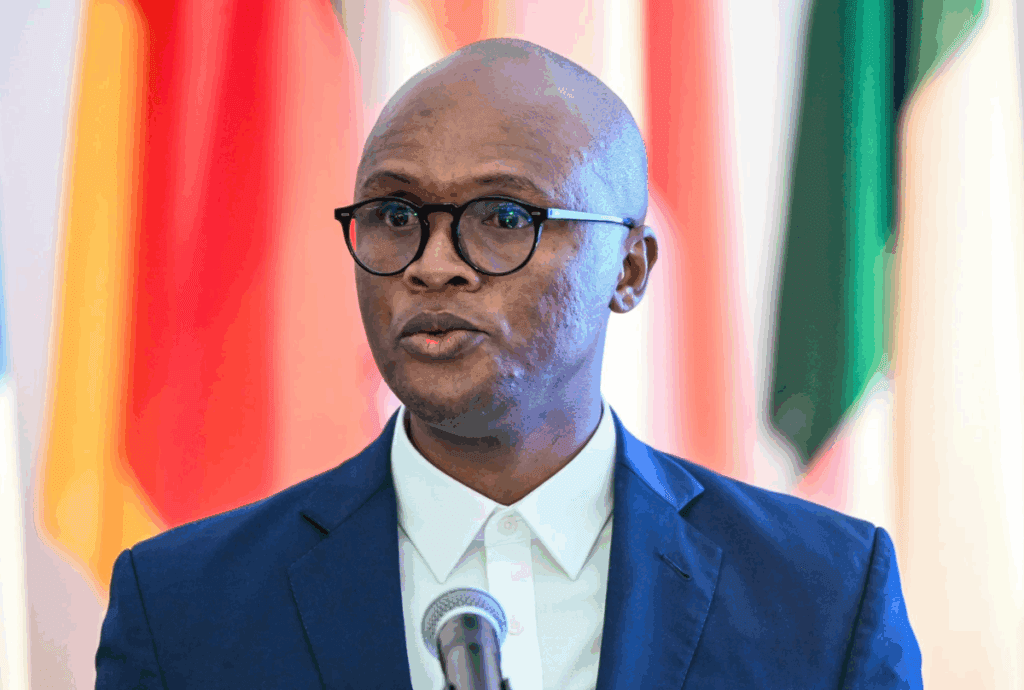
South Africa is edging closer to finalising its long-awaited National Artificial Intelligence (AI) Policy, with Communications and Digital Technologies Minister Solly Malatsi confirming that the framework is now ready to be presented to Cabinet for approval.
In an exclusive ITWeb TV interview, Malatsi said the policy’s development phase — including the public consultation and stakeholder feedback process — has been completed. Once adopted by Cabinet, it will lay the groundwork for future AI legislation and potentially a National AI Act.
“We rapidly need to have an AI policy as a country, and I’m going to make sure we definitely have one,” Malatsi said. “You’ll be glad to know that the incorporation and review of stakeholder comments are done. It is now due to be served in one of the next upcoming Cabinet meetings.”
Building the Foundation for Responsible AI
South Africa released its National AI Policy Framework for public consultation in April 2024, following the earlier AI discussion document that invited industry and academic feedback.
The final policy, according to legal experts at Michalsons, will serve as the foundation for regulating AI in South Africa — balancing innovation with ethical governance and aligning with global standards such as the EU AI Act.
Malatsi acknowledged that policy development has been slower than expected, citing the country’s multi-layered consultation and compliance processes.
“The framework goes out for comment; depending on the number of comments received, those must be integrated. It then gets taken through the Cabinet cluster process, departmental channels, and finally Cabinet — before Parliament considers it as a Bill,” he explained.
Aligning with a Changing AI Landscape
The minister noted that AI’s rapid evolution since the initial draft was released has made refinement critical.
“That’s why it was important that we started with the framework and then let society and all the key players make contributions. Once it’s approved by Cabinet, we’ll begin engaging experts on fine-tuning the policy to ensure it reflects the current AI environment,” he said.
The National AI Policy will be a cornerstone in South Africa’s broader digital transformation agenda — shaping how AI is developed, deployed, and governed across industries.
Regional Context: Africa’s Emerging AI Leaders
While Nigeria, Rwanda, and Mauritius have already advanced their AI strategies, South Africa — traditionally seen as a digital pioneer in the Global South — has yet to formalise a national AI roadmap.
Malatsi’s commitment signals renewed urgency for South Africa to position itself as a leader in responsible AI adoption, leveraging innovation for economic growth and job creation.
Balancing Digital Transformation and Governance
The interview also touched on broader digital inclusion and governance challenges within the Department of Communications and Digital Technologies (DCDT), which oversees 11 state-owned entities — including the South African Post Office (SAPO).
Malatsi emphasised the need to modernise SAPO and make it relevant again through innovation and technology.
“There is space for the post office in this period we live in,” he said. “However, for it to be relevant, there must be major adjustments in approach, strategy, and policy — focused on innovation and adopting technological infrastructure that allows it to provide a reliable service.”
Next Steps
Once approved by Cabinet, the National AI Policy will proceed to Parliament for formal processing as a Bill, marking a decisive step toward establishing South Africa’s first comprehensive legal framework for AI.
If enacted, it will guide the ethical, economic, and social integration of AI — positioning South Africa to lead AI innovation responsibly within Africa’s digital economy.
#South #Africas #National #Policy #Nears #Cabinet #Approval #Minister #Solly #Malatsi