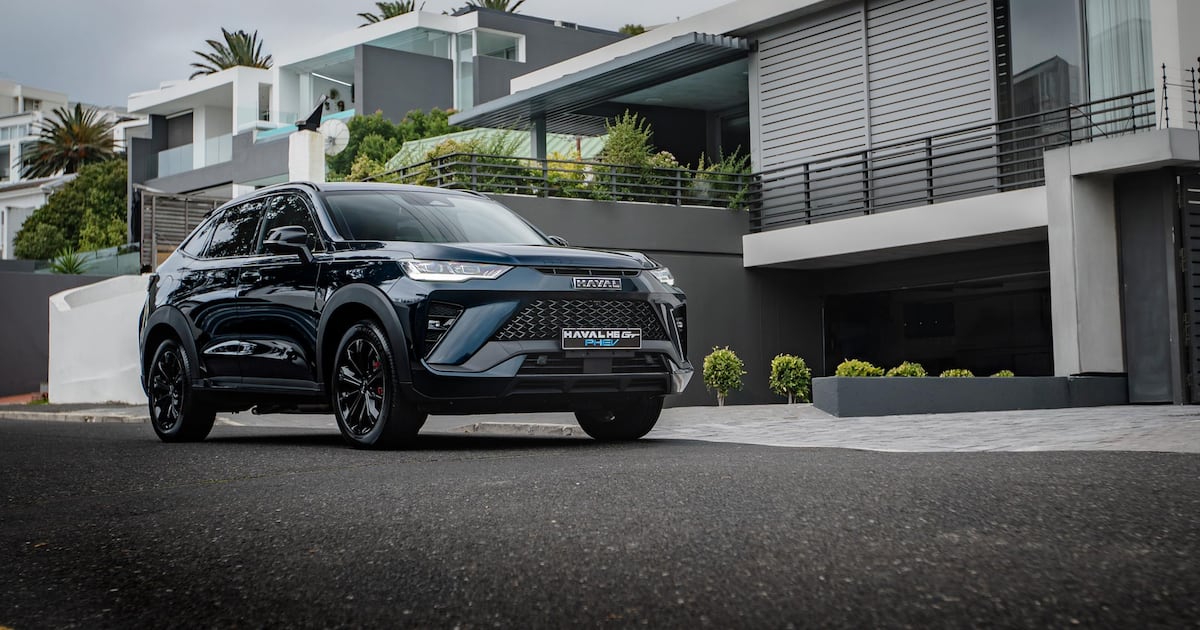
Great Wall Motors (GWM) is 18 years old in SA. Still a junior compared to legacy brand stalwarts, some of which (such as Volkswagen) have over seven decades of presence.
But among Chinese peers the company lays claim to being the oldest, with an uninterrupted market presence since 2007. Technically, Chery would be second in line, coming to Mzansi in 2008 but experiencing a hiatus since 2018 before returning in 2021.
From a consumer standpoint, if the appeal of owning a Chinese vehicle takes hold, these established players are likely to be top of mind. Unlike newfangled, smaller marques that entered in recent years, brands such as GWM have had more time to set down roots where crucial aspects like aftersales and parts offerings are concerned.
GWM, particularly with its Haval brand, also played a role in elevating perceptions around Chinese cars. The Jolion of 2021 is noteworthy; referring to our original launch report of the model, we described it as the best car to have come from China at that point.
The sales figures for the model evidenced the rise of Haval. And the larger C-segment H6 gave the brand a further push upward. Earlier this year, the updated H6 was launched, including the GT plug-in hybrid electric (PHEV) model.

Boldly, the carmaker chose Franschhoek Motor Museum as the launch venue, going as far as allowing us to drive the GT for a few spirited laps around the private track at the site.
It left a good impression, a feeling cemented after recently spending a week with the vehicle. Undoubtedly, it is one of the most compelling Chinese models on sale right now, representing a relative bargain if 0-100km/h sprinting abilities are an important metric.
About R799,900 puts you behind the wheel of a car with all-wheel drive and a claimed sprint time of 4.9 seconds. The person in your peer group who spent nearly R1m on a Volkswagen Golf GTI (claimed 0-100km/h in 5.9 seconds) is probably not going to invite you to their next braai out of embarrassment.
But aside from its surprising athleticism off the line, the GT is a remarkable fuel-sipper. Its quoted range in all-electric mode is 180km. We barely made a dent in the fuel tank capacity of 55l. Driven in hybrid mode, owners can expect consumption figures in the 5l/100km region; our test car went between 4.8l/100km at best and 5.5l/100km at worst.
What enables the lengthy zero-emissions range of the GT is a sizeable battery (35.5kWh); similarly sized PHEV models such as the Chery Tiggo 7 CSH we also tested recently have capacities under 20kWh.
This is a bit more expensive than the Chery, but it is also a very different prospect, with the obvious performance trump card. You can understand the initial skepticism, evaluating a car of this nature with such aspirations, but it seems the engineers at GWM did some work to imbue it with a genuinely dynamic sense.

Now, it is no Porsche Macan, but it does stop and steer in a far tidier manner than expected – it also helps that the car was fitted with quality rubber (Michelin Primacy). The four-wheel drive system makes a massive difference too, because some front-driving PHEV models are prone to traction issues.
The outputs from the GT are substantial, with the electric motor and 1.5l, turbocharged petrol engine pushing out a combined 321kW/762Nm. That is transmitted via a two-speed, dedicated hybrid transmission (DHT).
The sensation is very different from that of a conventional, non-hybrid performance SUV – there is no satisfaction of feeling the gears shift, nor is there an especially thrilling acoustic character to accompany the pace. But if all you want is the potential to scoot away from traffic lights and upstage people in hot hatchbacks, the GT does the job well.
In fairness, it serves more than that. Once the novelty of its off-the-mark punch wears off, you learn to appreciate its other, more sensible attributes. The quietness of the cabin, the well-resolved nature of the chassis with its compliant ride and light steering, a bounty of standard features and attractive interior trimmings.
With elements inspired by carbon fibre, Alcantara-like inserts and contrasting red fixtures, the GT’s cabin feels more special than that of the average generic Chinese family car.
Aside from a presumptuous climate control system that automatically changes airflow direction to the windscreen even if it senses a hint of glass-fogging, there was nothing major to criticise about the GT.

Even its in-car voice assistant worked without quirks, which is not usually the case in Chinese cars, which seemingly have language barriers and questionable translations.
But perhaps one could be scathing about those exterior aesthetics. They are simply over-the-top, trying too hard, and unfortunately, the GT has drawn some unfortunate comparisons. Some say it looks like a Lamborghini Urus ordered on Temu.
Pity, because a car this good deserves to have an aesthetic character that can be taken seriously.
#Haval #peoples #performance #SUV