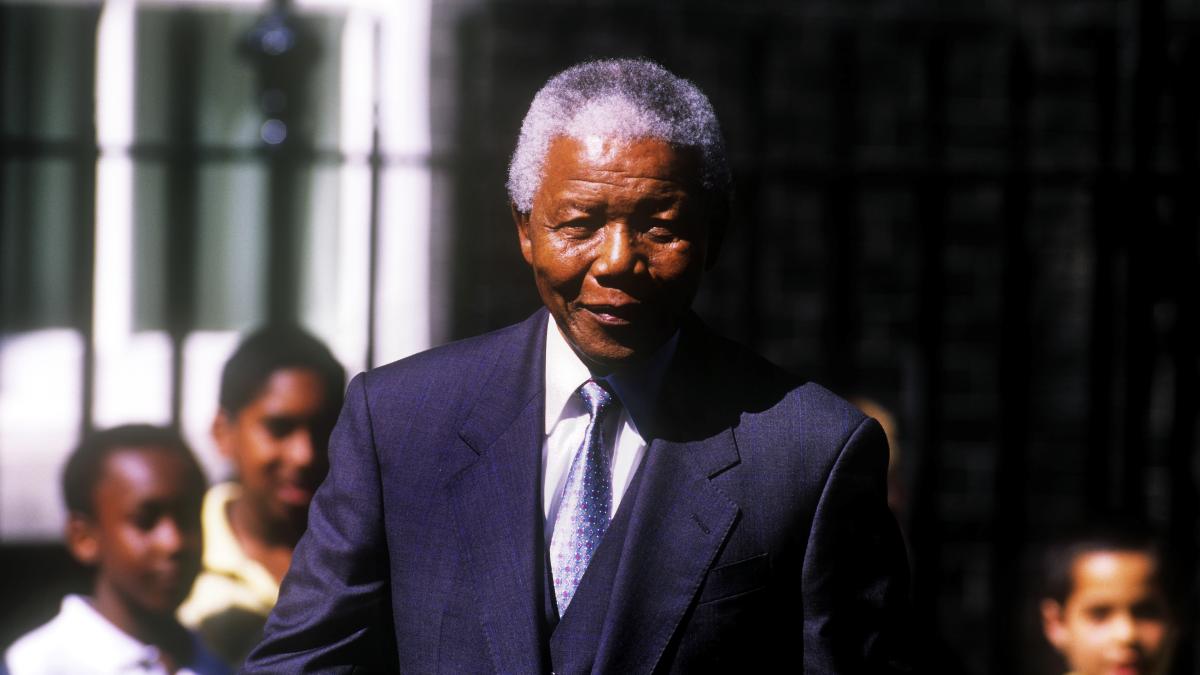
Nelson Mandela and his successor, Thabo Mbeki, reduced South Africa’s inherited debt and avoided a World Bank or IMF bailout. However, this work has been squandered.
When Mandela became South Africa’s first democratic president, he was concerned about the country’s massive debt.
When the ANC took over from the Apartheid regime after South Africa’s first democratic elections in 1994, the economy was in shambles.
Debt service costs as a share of gross domestic product (GDP) were crippling, and economic growth rates were declining.
The economy’s annual average growth rate was 1.0% between 1985 and 1990, falling to 0.2% between 1990 and 1994.
Simply put, South Africa was in dire financial straits, and the country required drastic measures to resolve the situation. A bailout would have been the easy route.
However, Mandela was vehemently opposed to a bailout from the International Monetary Fund or the World Bank, as these bailouts came with stringent conditions.
Mandela described how the president of the IMF visited South Africa and stated that the reason the rand was unstable was that South Africa’s foreign reserves were very low.
“I am prepared to help you, to give you funds,” the former IMF president told Mandela during his South African visit.
However, Mandela refused. “The difficulty with you is that you impose conditions which violate the sovereignty of a country,” Mandela told him.
Instead, Mandela and Deputy President Thabo Mbeki developed and implemented a policy framework to reduce government debt and stimulate economic growth.
Mandela’s strategy focused on fiscal discipline and budget redirection to avoid a “debt trap” that would trigger a World Bank or IMF bailout with restrictive conditions.
They gradually reduced the fiscal deficit, avoided a debt trap, and limited any real increase in recurrent government expenditure.
The Mandela presidency was able to stabilise the country’s finances and achieve an average economic growth rate of 2.7%.
Under Mbeki, with Trevor Manuel as Finance Minister, the country achieved even stronger economic growth and significantly reduced its debt-to-GDP ratio.
In 2008/09, South Africa’s gross loan debt totalled R627 billion, equivalent to 26% of the country’s gross domestic product (GDP).
Between 1994 and 2007, S&P Global and other ratings agencies upgraded South Africa’s credit rating numerous times. The country was doing very well economically.
Nelson Mandela and Thabo Mbeki’s financial legacy destroyed

Under the Jacob Zuma administration, South Africa’s economic growth stalled, and the country began to run significant deficits.
Under Zuma and his finance minister, Pravin Gordhan, South Africa’s debt-to-GDP ratio increased tremendously, undoing the good work of Trevor Manuel.
Over the next fifteen years, under Zuma and Ramaphosa, the government’s gross loan debt ballooned to R5.21 trillion, or 73.9% of GDP.
Renowned economist Dawie Roodt stated that the negative trajectory began with Gordhan, when South Africa’s debt-to-GDP ratio doubled from 26% to 50%.
He gave large salary increases to civil servants, and state-owned enterprises that were mismanaged and corrupt received billions in bailouts.
The poor policies implemented under Zuma, with Gordhan as finance minister, continued after they left their positions.
Exorbitant government spending and a stagnant economy resulted in the state’s debt burden surging from 26% of GDP in 2008 to over 77% in 2025.
South Africa spends over R1 billion per day servicing this growing debt burden, taking money away from education, healthcare, and policing.
However, this is not the only debt South Africa has. The government also has R707.8 billion in contingent liabilities, which include SOE guarantees.
South Africa’s deteriorating financial position also saw it break its long-standing tradition of avoiding IMF debt.
In July 2020, it received a US$4.3 billion emergency loan from the IMF, and in 2022, it received a $750 million development policy loan from the World Bank.
The country also received large loans from the World Bank for energy transition, power sector reforms, infrastructure, and local government.
Nelson Mandela and Thabo Mbeki’s reforms, aimed to create a sustainable financial situation for South Africa and avoid bailouts, are now long forgotten.
The government treated state finances and state-owned enterprises as their personal enrichment tools, and South Africans are now paying the price.
South African finances


#Nelson #Mandela #turning #grave #Newsday