The rise of Artificial Intelligence (AI) has transformed industries from healthcare to finance, but one area where its influence is both promising and perilous is cybersecurity. On one hand, AI enables attackers to craft more sophisticated and autonomous threats than ever before. On the other hand, it empowers defenders with predictive analytics, automated decision systems, and AI-driven orchestration tools capable of real-time threat mitigation. The future of digital security will depend not on whether AI is used, but on how both sides of the conflict leverage it within their threat intelligence and defence frameworks
When cybercriminals think like machines
Traditional cyberattacks often relied on volume via brute force, sending out millions of spam emails or testing countless passwords until one slipped through. AI, however, changes the game by giving attackers the ability to operate with intelligence and precision. Machine Learning (ML) models can analyse vast amounts of stolen data to tailor phishing campaigns so convincingly that they bypass even the most cautious employees. Similarly, generative AI tools can craft polymorphic or self-mutating malware that adapts on the fly, evading signature-based antivirus systems. In essence, AI allows cybercriminals to think like machines, anticipating defences and exploiting weaknesses at a scale and speed that humans alone could never match and outpace traditional detection mechanisms
The rise of adaptive threats
Adaptability makes AI-driven attacks extremely dangerous. Modern Malware no longer needs to remain static; it can learn from detection attempts and modify its behaviour to evade security systems. This concept, known as ‘adaptive threats’, refers to the ability of threats to change and evolve in response to detection and countermeasures. Imagine ransomware that can adjust its encryption techniques in real time or phishing campaigns that automatically test which language, tone, or timing is most effective against a target audience. These evolving threats mean that traditional security strategies, which rely on known patterns and signatures, are rapidly becoming outdated. As these evolving threats move beyond static signatures, security teams must complement traditional tools with behavioural analytics and threat intelligencecorrelation aligned to frameworks such as MITRE ATT&CK and Cyber Kill Chain.
Fighting fire with fire: AI-powered defence
If attackers are using AI, defenders must meet them on the same level playing field. AI-powered cybersecurity systems today integrate machine learning classifiers, graph analytics, and anomaly-detection pipelines to analyse terabytes of telemetry from endpoints, networks, and cloud services in real-time. Unlike human analysts, who might miss subtle anomalies, AI can detect patterns that suggest an intrusion within milliseconds. For example, behavioural analytics powered by ML can flag unusual activity, such as an employee logging in from two distant locations within minutes, that might otherwise go unnoticed. These systems not only detect threats faster but also automate responses, containing breaches before they escalate.
Moving beyond reactive security
Historically, cybersecurity has often been reactive; waiting for an attack to occur before deploying countermeasures. AI shifts this paradigm by enabling predictive and proactive defence. By continuously analysing global threat intelligence feeds and correlating them with local activity, AI systems can predict the likelihood of an attack and fortify defences in advance. This predictive capability is akin to forecasting a storm before it hits, allowing organisations to prepare rather than scramble. In a digital landscape where milliseconds matter, moving from reaction to anticipation could mean the difference between a minor incident and a catastrophic breach.
The human-AI partnership
Despite its potential, AI alone cannot solve the cybersecurity challenge. Just as attackers blend machine capabilities with human creativity, defenders must combine AI’s speed with human judgment. Automated systems can flag anomalies, but it takes skilled professionals to investigate context, make strategic decisions, and craft long-term security policies. The ‘human-AI partnership’ is crucial in cybersecurity, as it ensures that AI is not replacing human defenders but augmenting them by offloading repetitive monitoring tasks, allowing experts to focus on higher-level strategies. This creates a Human-in-the-Loop (HITL) model, where machine precision complements human insight. Concepts like Explainable AI (XAI) and model interpretability frameworks ensure analysts understand why a model flagged an event, improving trust and governance. Examples like a phishing attempt flagged by AI, for instance, still require human awareness to prevent the click.
The role of IT providers in scaling defence
For many organisations, especially SMBs and mid-tier enterprises, building sophisticated AI-powered defences internally is neither practical nor affordable. This is where Managed Detection and Response (MDR) and AI-driven SOC-as-a-Service providers become critical. They bring the infrastructure, expertise, and economies of scale needed to deploy advanced AI security solutions across diverse environments. These third-party providers can offer a range of services, from cloud-based monitoring to managed security operations centres, that can help level the playing field by giving smaller enterprises access to the same defences as large corporations. By partnering with specialists, organisations can protect themselves without shouldering the full cost and complexity of implementation.
Striking the right balance
The dual use of AI in cybersecurity raises an important question: will AI ultimately tip the balance in favour of attackers or defenders? The answer depends on how quickly and effectively organisations embrace AI-driven defence strategies. Organisations that invest in AI-driven defences, maintain model drift monitoring, and align to standards like NIST AI Risk Management Framework (AI RMF) and ISO/IEC 23894 (AI governance) will remain resilient. Those who hesitate risk being outpaced by adaptive threats, while those who act decisively can turn AI into a shield rather than a weapon. The key lies in striking the right balance; investing in AI defences, fostering human expertise, and collaborating with IT providers to ensure that technology remains a tool for protection, not exploitation.
Toward a smarter and safer future
AI has made cybersecurity a more complex, high-stakes, data-driven battleground. Yet it has also given defenders tools of unprecedented power. The coming years will be defined by an arms race in which both sides harness machine intelligence to outwit one another. Success will hinge on automation maturity, threat intelligence fusion, and interoperability between AI systems and human expertise. By embracing AI responsibly and strategically, businesses can transform a daunting challenge into an opportunity: the chance to build smarter, safer systems, self-healing and resilient digital ecosystems that withstand the evolving tactics of the digital age.
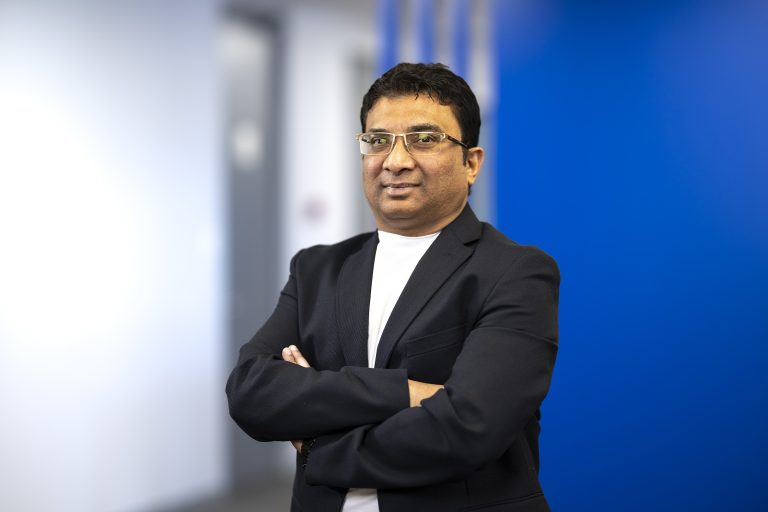
By Avinash Gupta, Head of COE (Centre of Excellence) at In2IT Technologies
#Cybersecurity #Battleground #Breakthrough