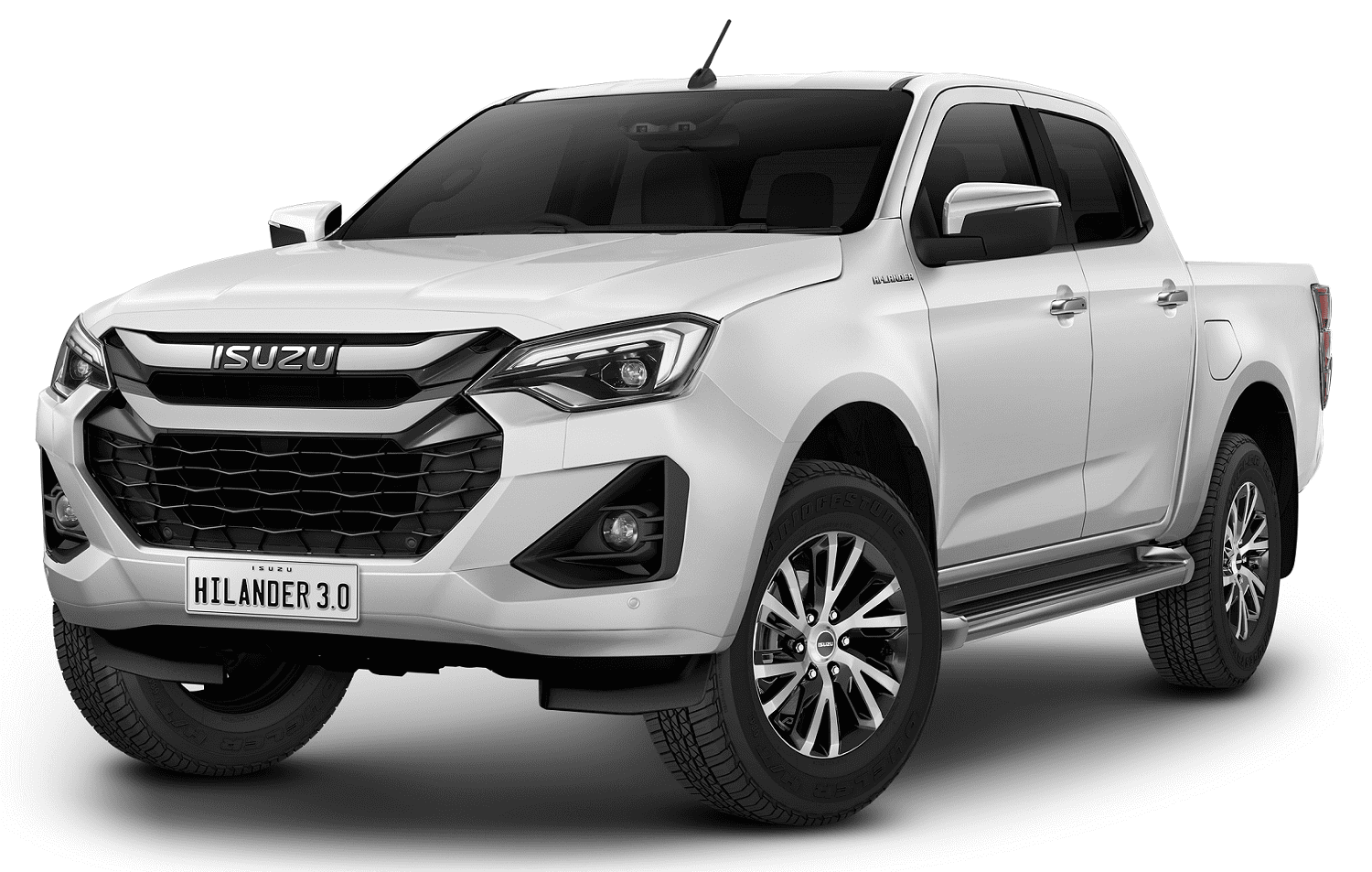
Long overdue facelift D-Max will soon go on-sale.
Isuzu has officially started teasing the much-awaited facelift D-Max for South Africa, just under three years after it debuted in Thailand.
Watch the teaser video below
In a teaser clip posted on its social pages, the internally named RG D-Max’s changes for South Africa will, seemingly, be identical to those of the model sold in Thailand and Australia.
ALSO READ: Isuzu removes wraps from improved, facelift D-Max
Shown at the brand’s State of the Company address at its Struandale plant in Gqeberha on Wednesday (4 February), the facelift model made a brief appearance outside the plant.
However, it was quickly driven back into the plant before being exhibited to the media as part of a tour through the facility. As such, taking pictures was forbidden.
Changes to expect
Exhibited in top-spec V-Cross guise, the noted changes include new headlights, a revised bumper, new daytime running lights and a restyled grille.
Minor changes are at the rear, namely a freshened-up bumper and tailgate, and new wheel arch cladding for the range-topper.

Unseen, speculation is that the interior changes will be nearly identical to those of the Thai and Aussie versions.
This means improved materials, a new seven-inch digital instrument cluster on higher-end derivatives and Type-C instead of Type-A USB ports.

Also new, both the seven and nine-inch infotainment systems lose the physical shortcut buttons at the base of the display for touch-sensitive switches.
New, though, are a pair of physical knobs for the radio tuner and volume, and wireless Apple CarPlay, but still wired Android Auto.
A new Adaptive Cruise Control system, designed specifically for models fitted with the six-speed manual gearbox, rounds out the changes.
2.2 coming but not immediately
Up front, the D-Max is likely to prevail with the existing RZ4E-TC 1.9-litre and 4JJ3-TCX 3.0-litre DDI turbodiesel engines.

Despite the introduction of the new 2.2-litre RZ4F Max Force oil-burner in 2024, Isuzu Executive Vice-President for Manufacturing and Product Engineering, Dominic Rimmer, said the unit first needs testing in local market conditions, which hasn’t taken place at present.
“We are looking at the 2.2, but we first need to test it locally. It will come, but we need to make it ready for South Africa,” he said.
Why arriving only now?
Addressing criticism of the delay of both the facelift model, Rimmer stated that launching it in Thailand doesn’t immediately lead to approval being granted for Isuzu South Africa to do likewise.
Instead, a so-called time freeze of two years needs to go by first. Only after this can markets assembling it from complete knockdown (CKD) kits gain access for local adaptation.
As such, full importation rather than made in CKD form explains why the D-Max went on sale in Australia soon after its global launch in Thailand in 2019.

The freeze rule, as well as the global pandemic, therefore explains why South African market D-Max sales only started later in 2022 than had originally projected.
At the same time, Rimmer stated that product localisation isn’t as easy as changing one or two components from the Thai-spec model.
Adapting the D-Max for South Africa means changes to the following:
- body and doors;
- loadbox and tailgate;
- rear axle;
- suspension;
- chassis and frame;
- cooling system;
- electrical system;
- brakes;
- powertrain tuning;
- exterior;
- heating, ventilation and air-conditioning;
- security system
Not over yet
The process doesn’t stop there, as the various changes are then made to a pre-production or pilot D-Max imported from Thailand.
This is followed by intensive testing in various conditions, from high-speed gravel driving to in-house testing at Struandale in a climatic chamber and at Gerotek.
In total, the so-called “built-up” units need to clock 100 000 km of test mileage. Once completed, they are “refined” into the final product.
With the refinements applied, a final series of tests is carried out before it enters production as the consumer product.
Accordingly, the final process in making the D-Max ready for South Africa can take up to three years.
In addition, Rimmer admitted that applying for the changes themselves isn’t as easy a process as they need to be presented to both Japan and Thailand.
In some instances, the requests are either not granted or require serious convincing based on scale and cost.
Only after this, and the completion of the freeze period, can it import a vehicle before setting about adapting it.
No date of reveal yet
As it stands, no official date for the facelift D-Max’s reveal has been set. However, given the timing of the mentioned teaser, expect an announcement sooner rather than later.
NOW READ: Finally here: All-new Isuzu D-Max priced
#Isuzu #South #Africa #explains #facelift #DMax #delay #teasers #starts