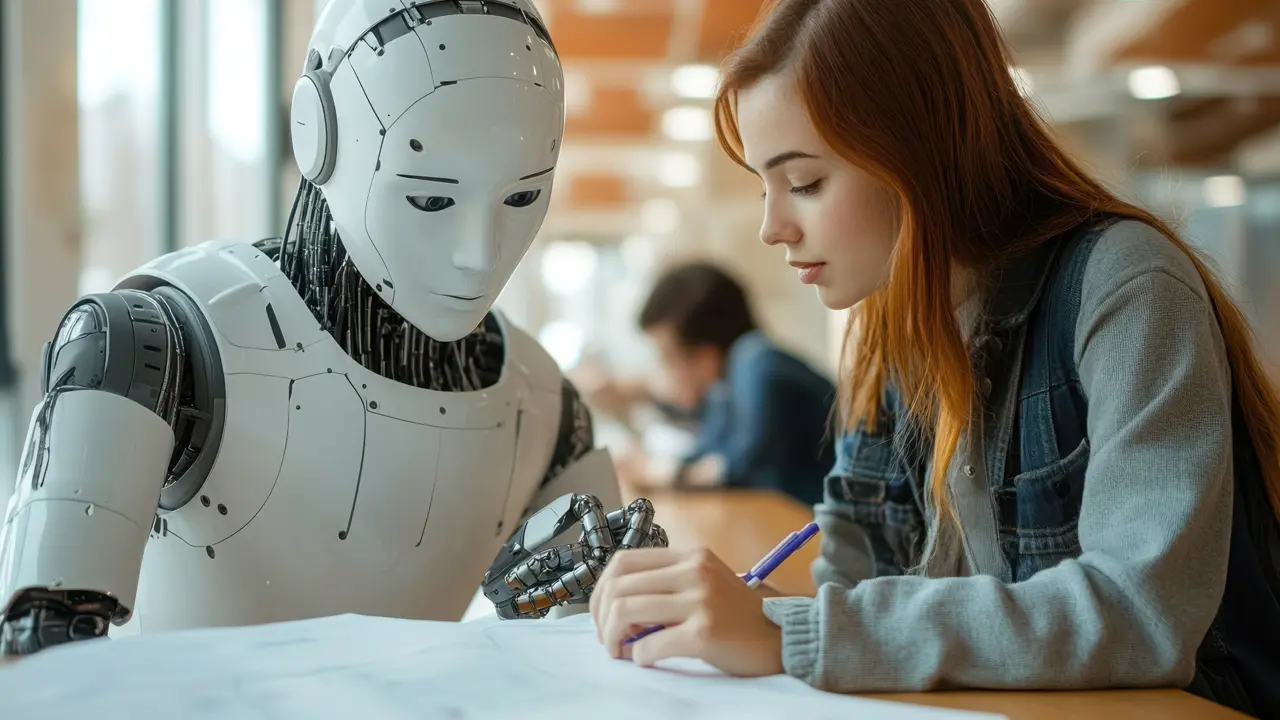
Concerns are mounting across South Africa’s higher education sector as universities struggle to contain the rapid spread of artificial intelligence tools among students.
The University of South Africa has reported a marked increase in AI-assisted submissions, contributing to rising plagiarism levels and a growing backlog of disciplinary cases. The development is intensifying anxiety among educators and parents who fear the technology could undermine academic credibility and the value of university qualifications.
AI engineer Akhil Boddu says the shift is profound because AI is now embedded in everyday student workflows. While many students use AI tools for research support or structuring ideas, problems arise when entire essays or answers are generated and submitted as original work. Detection systems can flag AI-generated content, but they are not fully reliable, creating disputes between students and institutions and adding pressure on already stretched disciplinary processes.
Experts warn that the traditional model of written assignments may no longer be sufficient to determine whether students genuinely understand their coursework. Boddu says universities may need to move toward assessment methods that focus on demonstrating understanding rather than simply producing written work. Possible changes include oral discussions or interviews conducted after assignments are submitted, requirements for students to declare how AI tools were used, and greater emphasis on reasoning, explanation and applied knowledge. Some universities internationally have already begun shifting toward these models, and South African institutions may soon face pressure to follow.
There are also concerns about how AI is reshaping the way students engage with study material. Tools that summarize textbooks, research papers and lecture notes are making it easier to process large volumes of information quickly, but educators worry that students may be reading less deeply, relying on summaries rather than engaging with full texts.
While banning AI tools might appear to be a straightforward response, experts say it is unlikely to work given how widespread the technology has become. Instead, universities may have little choice but to adapt how they teach and assess students in the AI era. For South Africa’s education sector, the challenge is no longer whether AI will change learning, but how quickly institutions can respond before academic standards are compromised.
#Cheating #Cases #Pile #South #African #Universities #Institutions #Struggle #Respond
