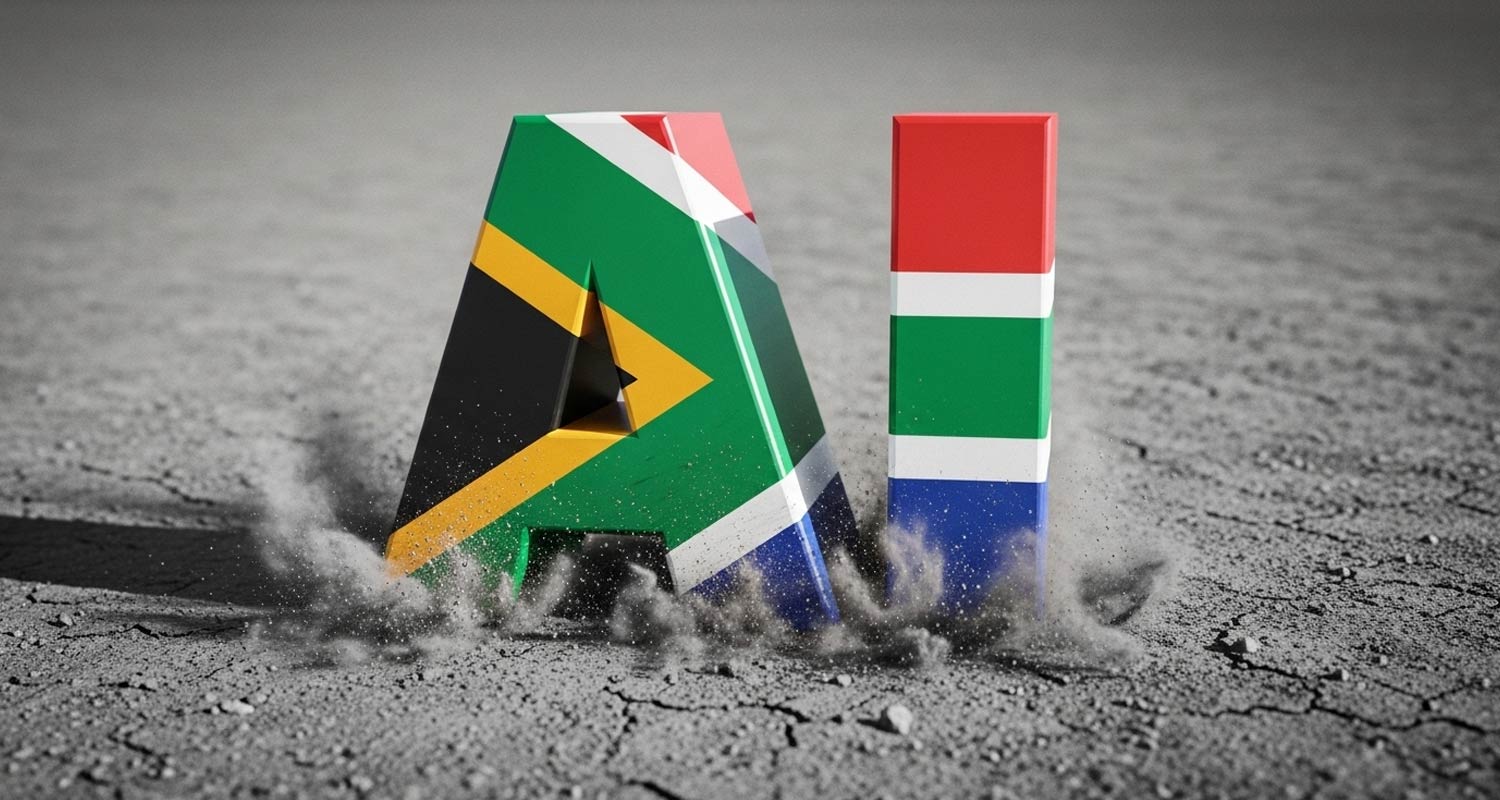
South Africa’s national artificial intelligence policy will be finalized in the 2026-2027 financial year, with the government preparing to launch an implementation plan following a recent colloquium on the country’s AI policy framework.
The draft policy will be reviewed by the economic cluster ministerial council next month before advancing to a cabinet committee. It is expected to be published in the Government Gazette in March for a 60-day public comment period.
Communications Department Deputy Director-General Alfred Mmoto, who heads policy development and strategy, briefed Parliament’s portfolio committee on communications and digital technologies on the framework’s timeline and objectives. He said the policy is built on 14 pillars including education, training, industry collaboration, digital infrastructure, innovation, ethical guidelines, safety and privacy. While the policy will be overarching, he said sector-specific regulations will need to be developed separately.
Between now and June, a quarterly digital economy stakeholder forum with five workstreams will be established. The communications ministry will also set up a priority working group comprising the department, the South African Local Government Association and the cooperative governance department to improve the implementation of bylaws and develop a concept document for a national evidence hub.
From July through December next year, the government plans to operationalize a regulators forum, review and update the national digital skills framework, establish an investment desk and startup desk, launch ICT sector regulator sandboxes and develop a legislative coordination road map.
Mmoto said a key focus of the policy is ensuring human oversight remains central to AI development. “We can’t use AI as just a black box,” he said, adding that the policy will address accountability for AI systems that cause societal harm and include guardrails against the spread of deepfakes and misinformation.
He also emphasized the importance of training AI systems on inclusive, locally representative data sets. “You’ll find that the AI systems that are not trained by the local data sets most likely have bias,” Mmoto said, adding that the policy advocates for developing language models for languages with fewer speakers and using AI to digitize indigenous knowledge systems as well as music and art for economic development purposes.
South Africa began developing its AI policy in 2020 and has relied on self-regulation in the interim. Progress has been slower than in some peer nations, though officials say the consultative process has improved.
Discussions at Tuesday’s parliamentary briefing touched on the tension between regulation and innovation. Acting committee chair Shaik Imraan Subrathie noted that India views heavy regulation as a brake on innovation while the European Union takes a more restrictive approach. Last year, the Free Market Foundation warned against South Africa blindly adopting EU technology regulations.
Mmoto said the department, following a benchmarking exercise, shares concerns about the EU regulatory model and is instead pursuing what he described as a middle-of-the-road approach. “We have to have this policy in order to make sure that we have a policy lever upon which we can stimulate economic growth, ensure social wellbeing, but also ensure that we position our country deliberately as a leader in innovation,” he said.
#South #Africa #Finalize #National #Policy #Seeking #Middle #Ground #Innovation #Regulation