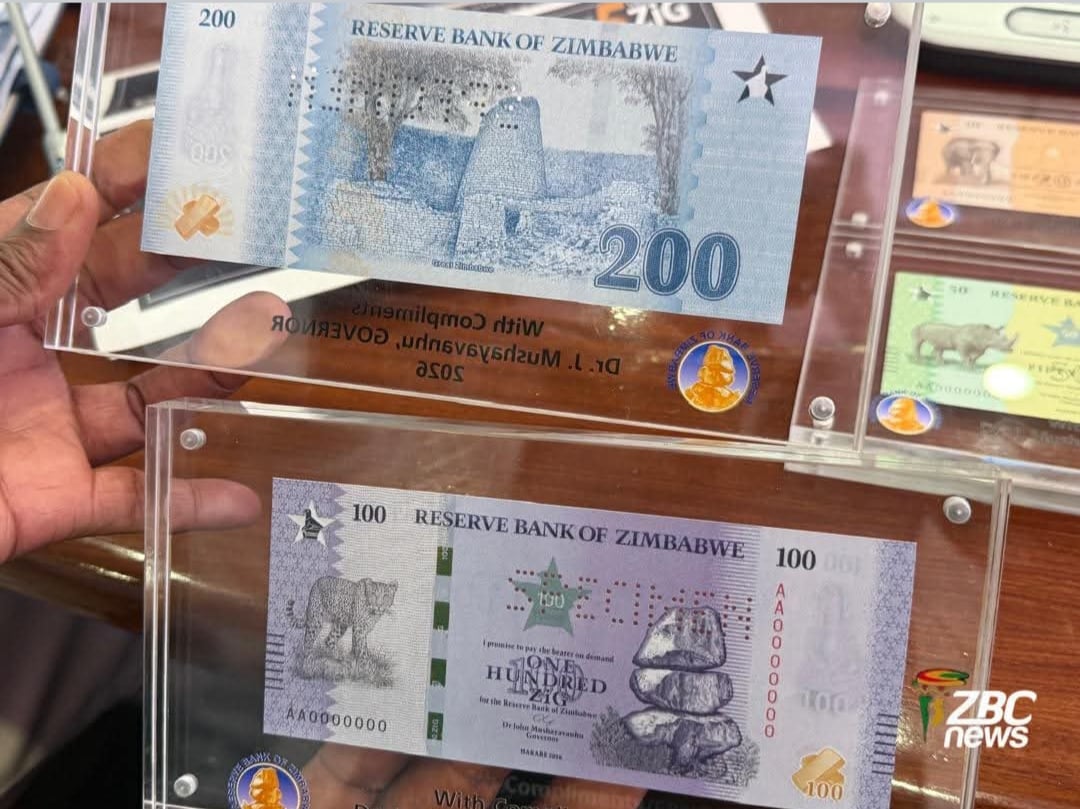
Zimbabwe’s Currency Experiment Faces Fresh Doubts
Sports Correspondent – The Reserve Bank of Zimbabwe (RBZ) has once again stopped short of giving a firm timeline for the introduction of a mono-currency system, raising new questions about the government’s readiness to fully transition to the ZiG.
Presenting the 2026 Monetary Policy Statement on 27 February, RBZ Governor John Mushayavanhu said the move to the exclusive use of ZiG for all domestic transactions would not be driven by a fixed date, but by the fulfilment of specific economic benchmarks.
“The move towards a mono-currency system based on ZiG will be gradual and anchored in sustained macroeconomic stability, in line with the National Development Strategy 2 (NDS2),” Mushayavanhu said.
He emphasized that the transition would only occur once strict conditions are met, including durable macroeconomic stability marked by low, single-digit inflation, foreign currency reserves covering three to six months of imports, and an efficient foreign exchange management system that removes distortions and improves access to foreign currency.
Additional requirements include stable exchange rate movements with minimal over- or undervaluation of the ZiG, increased demand for the local currency through adjustments in the proportion of government taxes paid in ZiG, wider use of ZiG for public sector goods and services, and overall financial sector stability.
“The transition will only take place once key conditions have been met,” he said, adding that authorities must also maintain “an efficient and secure national payment system to make transactions in ZiG seamless,” alongside strong coordination between fiscal and monetary policy supported by low and sustainable budget deficits.
Under the proposed mono-currency framework, all domestic goods and services would be priced and paid for exclusively in local currency, while foreign currency would be reserved strictly for external transactions.
However, the absence of a clear roadmap or deadline has deepened scepticism among businesses and consumers who have witnessed repeated currency reforms and policy reversals in recent years.
For many, the conditional approach signals caution — or uncertainty — about whether the ambitious currency shift can realistically be achieved in the current economic climate.
Related
#Zimbabwes #Currency #Experiment #Faces #Fresh #Doubts #ZimEye