
South Africa’s mobile operators are from time to time recognised by global network experience specialist Opensignal for the quality of their networks. However, compared to their market-leading counterparts in other parts of the world, local telcos continue to lag on key metrics.
The lag is at first glance anomalous because, according to Sylwia Kechiche, vice president for industry analysis at Opensignal, the radio access network (RAN) equipment in South Africa is on par with global standards.
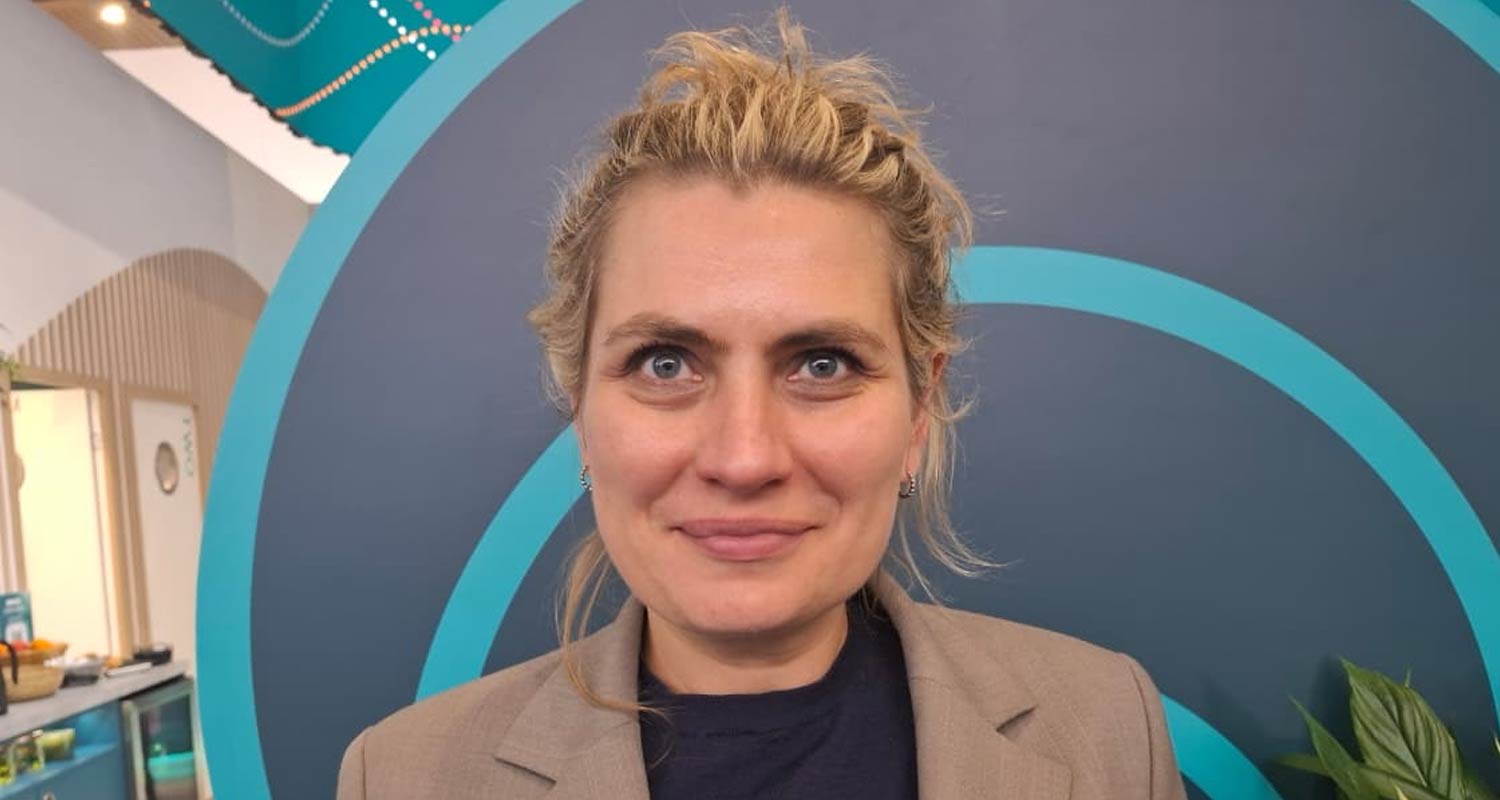
“We test end-to-end customer experience and, in the case of South Africa you might have the same RAN, but the RAN is not the only part of the network,” Kechiche told TechCentral in an interview on the sidelines of Mobile World Congress in Barcelona on Wednesday.
“Customer experience can be impacted by the transport layer, the core layer and the connections to the content providers. It is not the radio conditions that make the difference, it is the overall optimisation of the traffic from where the user is to where the content is located.”
The factors differentiating global leaders in network experience have to do with the richness of the connectivity ecosystem across user device types, edge network density, fibre backhaul capacity, local data centre capacity, local content hosting and spectrum availability.
But even at the RAN layer, South African mobile operators are limited in their ability to maximise yearslong investments made into the quality of their networks. This is because spectrum usage is not as efficient as it could be. Kechiche said perennial delays in the sunsetting of legacy RAN technologies, namely 2G and 3G, are locking up spectrum that could be used to propagate more efficient 4G and 5G signals typically associated with better network experiences.
Spectrum is key
Running four different generations of network technology also adds complexity that ultimately impacts user experience.
“Having enough spectrum is important. 2G and 3G are using existing spectrum, especially the lower mid-band spectrum, which is very valuable in terms of bringing added capacity,” said Kechiche.
Another factor closely related to radio access technologies is the device ecosystem. The reason South African regulators are yet to sunset 2G and 3G technologies is because a large portion of the population still relies on devices using these technologies for connectivity. Kechiche said countries with a higher number of 4G and 5G devices typically report superior network experience outcomes.
Read: South Africa’s best mobile networks
Also outside of the control of mobile network operators but affecting the network experience of their customers is the density of data centres and whether content providers such as YouTube, Netflix and the like host their content locally.
Opensignal compared the performance of a telco with operators in both South Africa and Kenya and observed that while the RAN was similar, the network experience varied because of where content was being fetched from.

“Their connection from Kenya to one of the main content delivery networks (CDNs) is not through the Middle East, which would be the fastest route. It goes to South Africa because there CDNs are located locally in Joburg or in Cape Town. So the performance in two countries might differ because they don’t have a local server,” said Kechiche.
There is also a strong correlation between fibre penetration density and mobile network experience. Because of its high capacity and reliability, fibre is the preferred backhaul technology for mobile towers. She cited Vietnam as an example where high fibre density supports stronger mobile experience outcomes but admitted that increasing fibre penetration is a challenge for a country like South Africa with a large landmass where the population is not concentrated in one area.
Kechiche said satellite direct-to-device capability is emerging as a promising technology for bridging connectivity gaps in countries with large landmasses, while infrastructure sharing is also emerging as a way to cut costs.
Read: Global network rankings put just one SA operator on the map
“Direct-to-device will not be able to answer everything but it is complementing terrestrial coverage. What we are also seeing is a lot of telcos sharing infrastructure to try and reduce costs – we see a lot of that in the Nordic countries, Singapore and Korea, too,” said Kechiche. – © 2026 NewsCentral Media
Get breaking news from TechCentral on WhatsApp. Sign up here.
#hidden #drag #South #Africas #mobile #networks