The Joke That Became Policy: Zimbabwe’s March to 2030
By Reason Wafawarova
We have a very simple case here.
In 2018 President Emmerson Mnangagwa took to the microphone to address the nation about Vision 2030 and declared in Shona:
“2030 ndinenge ndichipo.”
By 2030, I will still be here.
Some laughed it off as a joke. Others warned that the President was not joking at all — that he was announcing a plan to vandalise the Constitution in slow motion.
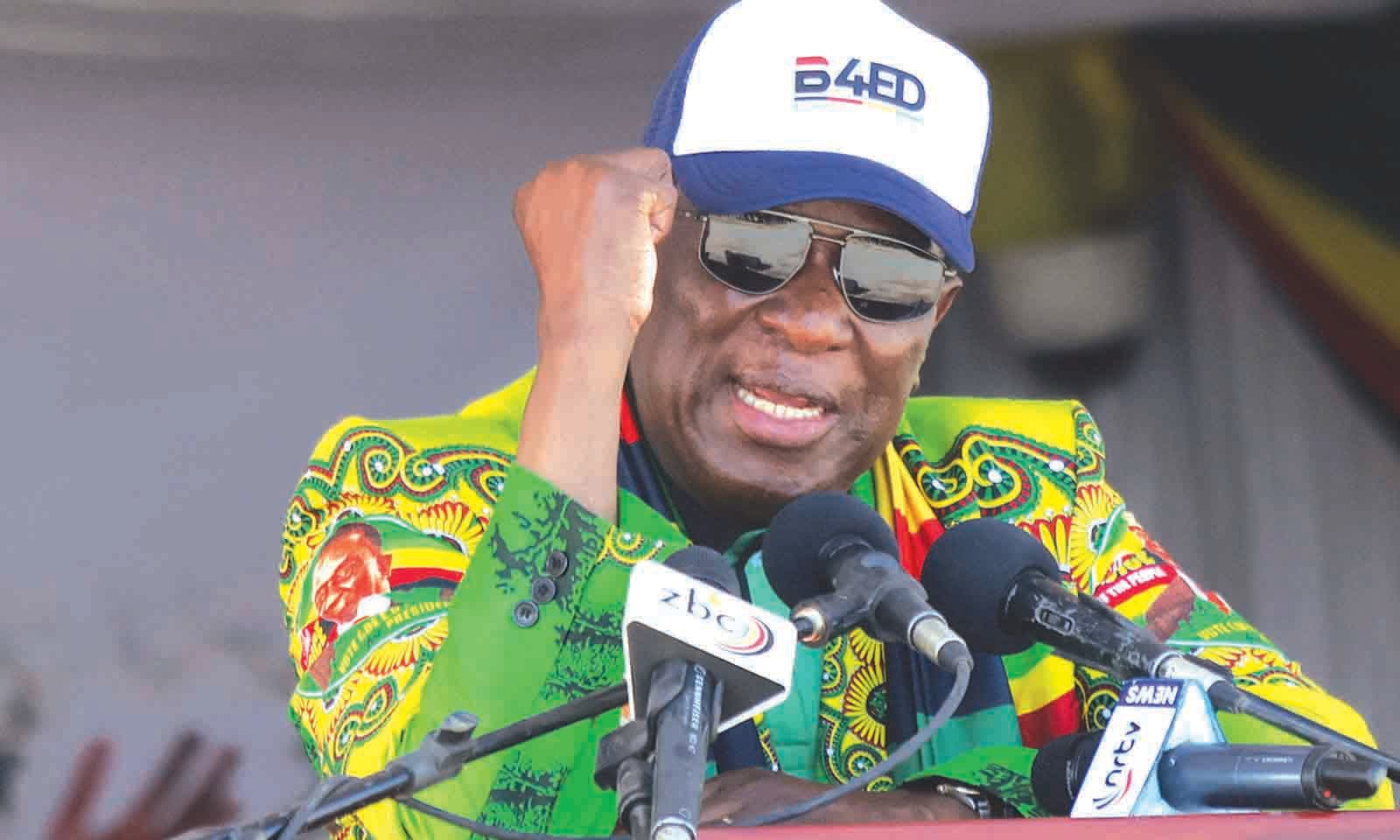
In 2023, at a rally at a school in Chivhu, the President paraded 16 Cabinet Ministers before the crowd and ordered them to introduce a new slogan.
From that day on, he said, chanting the slogan would be a prerequisite for anyone wishing to remain a Cabinet Minister.
With a smile he warned that even at that rally, if anyone refused to chant the slogan — or chanted it with insufficient enthusiasm — he would not hesitate to reshuffle them out of office on the spot.
The slogan was simple:
“2030! Vanenge vachitonga baba! (President Mnangagwa will still be ruling Zimbabwe in 2030).
His defenders reassured the nation that the President had a peculiar sense of humour. This was just one of his famous jokes, they said. Zimbabweans, they advised, should learn not to take everything so seriously.
Soon afterwards the Victor Car Dishing Programme began. Musicians, pastors, comedians, influencers, soccer legends and most people with influence suddenly discovered an appreciation for free vehicles, and with that appreciation came a remarkable enthusiasm for chanting slogans.
Then came the actual joke – presented to the nation as a State of the Nation address comboned with a Presser.
The President called a press conference at State House and declared:
“I made this Constitution. I am a constitutionalist. My term ends in 2028. In 2027 our party will elect someone to take over from me in 2028. I even know the date I will be leaving, and what I plan to do after.”
National jubilation followed.
The Western observers were perhaps the most convinced.
Some even began rediscovering Zimbabwe’s economic success in statistical form through institutions like the World Bank and the International Monetary Fund.
But the comedy did not end there.
At the party conference in Bulawayo, Patrick Chinamasa assured the nation that it was constitutionally impossible to extend the President’s term without a referendum.
A resolution was nevertheless passed to attempt exactly that.
Another followed the next year in Mutare.
By this stage the process had acquired serious investors.
Political entrepreneurs began appearing everywhere.
All manner of actors suddenly discovered deep constitutional concerns. Some purchased influence. Some purchased silence. Some purchased enthusiasm.
Members of Parliament were persuaded and bribed openly. Senators were persuaded and also bribed.
Online publications were persuaded. Even certain opposition politicians developed a newfound appreciation for constitutional creativity.
Then came the legislative masterpiece.
Ziyambi Ziyambi and Jonathan Moyo drafted what may well pass for one of the shoddiest constitutional amendment proposals in modern legal history.
Cabinet passed it anyway. Parliament gazetted it anyway.
Public outrage was noted politely and ignored professionally.
The police ensured arrests happened swiftly at the slightest sight of a dissenting voice.
In the policy document once proposed by the Brenthurst Foundation — the famous BBI strategy — there was a useful political tactic: overwhelm the public with so many unrelated changes that citizens eventually lose interest and walk away.
That may explain why a proposal built around one controversial change suddenly arrived with twenty-three additional amendments attached.
When confusion is policy, clarity becomes dangerous.
Now the plan reveals itself more clearly.
First, normalise the slogan: 2030.
Second, introduce a Bill creating a seven-year presidential term.
Third, pass the law.
Fourth, grant the seven years to President Mnangagwa beginning around September 2026, conveniently extending his stay to 2033.
Fifth, allow the current Parliament to vote itself into the same seven-year arrangement, in the name of stability, continuity and — as always — national interest.
In effect, the political clock would be reset.
Past limits would become historical inconveniences.
And by 2033, elections could be postponed yet again — perhaps in the name of peace, perhaps in the name of saving money, perhaps in the name of continuity.
Zimbabwe has always been a country where political jokes travel long distances.
But this one has travelled particularly far.
It began as a slogan. It matured into a rumour. It graduated into a policy debate.
And now it is slowly arriving as legislation.
So perhaps the real lesson is simple.
When a President in Zimbabwe makes a joke about staying in power until 2030, the correct response is not laughter.
The correct response is to start reading the next Constitutional Amendment Bill.
Related
#Zimbabwes #March #ZimEye