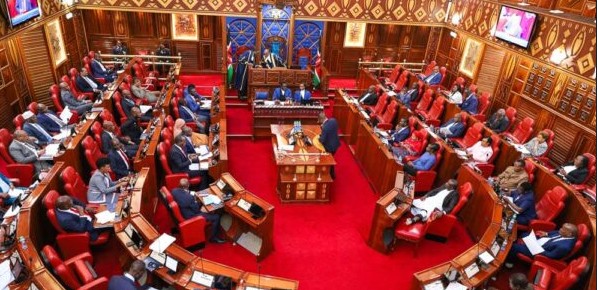
Kenya’s Senate is debating a proposed law that would regulate artificial intelligence, criminalize the misuse of AI-generated content and establish a national regulator, as concerns mount over the spread of deepfakes and digitally manipulated material ahead of future elections.
The Artificial Intelligence Bill, 2026, sponsored by nominated Sen. Karen Nyamu, would introduce new rules governing how AI is developed and used in the country. The legislation comes shortly after the High Court of Kenya issued an order on Feb. 6 in response to an urgent petition arguing that the absence of safeguards for high-risk AI systems threatens fundamental rights including privacy and equality.
A central feature of the bill is the creation of an Office of the Artificial Intelligence Commissioner, which would serve as the national authority responsible for regulating AI and ensuring compliance with the law. The commissioner would have powers to investigate complaints, impose penalties and require companies to modify how their algorithms function.
The bill introduces criminal liability for individuals or organizations that generate or distribute AI content using someone else’s image, voice or likeness without permission, where such content leads to misinformation, harm, defamation or privacy violations. Anyone convicted of such an offense would face a fine of up to 5 million Kenyan shillings, a two-year prison sentence, or both. The same penalties would apply to anyone found guilty of using AI to produce misleading or harmful content more broadly.
Technology providers that create tools capable of manipulating voices, images or likenesses would be required to obtain clear consent from affected individuals before using such material. Any content produced through these systems would also need to be clearly labeled as AI-generated — a requirement that would extend to political campaigns, meaning fabricated videos portraying opponents saying or doing things they never did could attract criminal charges.
The bill would also establish protections for individuals affected by automated decision-making. Citizens would be entitled to human review of automated decisions, the opportunity to express their views and the right to challenge outcomes produced by AI systems — in situations including employment screening, loan approvals, welfare support and insurance assessments.
Companies deploying AI systems would be required to clearly explain how the technology operates, including its purpose, limitations and the extent to which decisions are made automatically. They would also need to disclose measures taken to address bias. Failure to provide this information would attract penalties of up to 1 million shillings.
The bill proposes a four-tier classification system for AI technologies based on risk level. High-risk systems — including those used in healthcare, education, agriculture, finance, security, employment and public administration — would face stricter rules and closer oversight. The commissioner would maintain a public register of all high-risk AI systems in operation, including those used by county governments.
Additional provisions include the creation of an Advisory Committee incorporating representatives from the Data Protection Commissioner’s office, the National Commission for Science, Technology and Innovation and the Council of Governors, as well as the establishment of regulatory sandboxes where innovators can test new AI technologies under supervised conditions.
#Kenyas #Senate #Debates #Bill #Criminalize #Deepfakes #Establish #National #Regulator