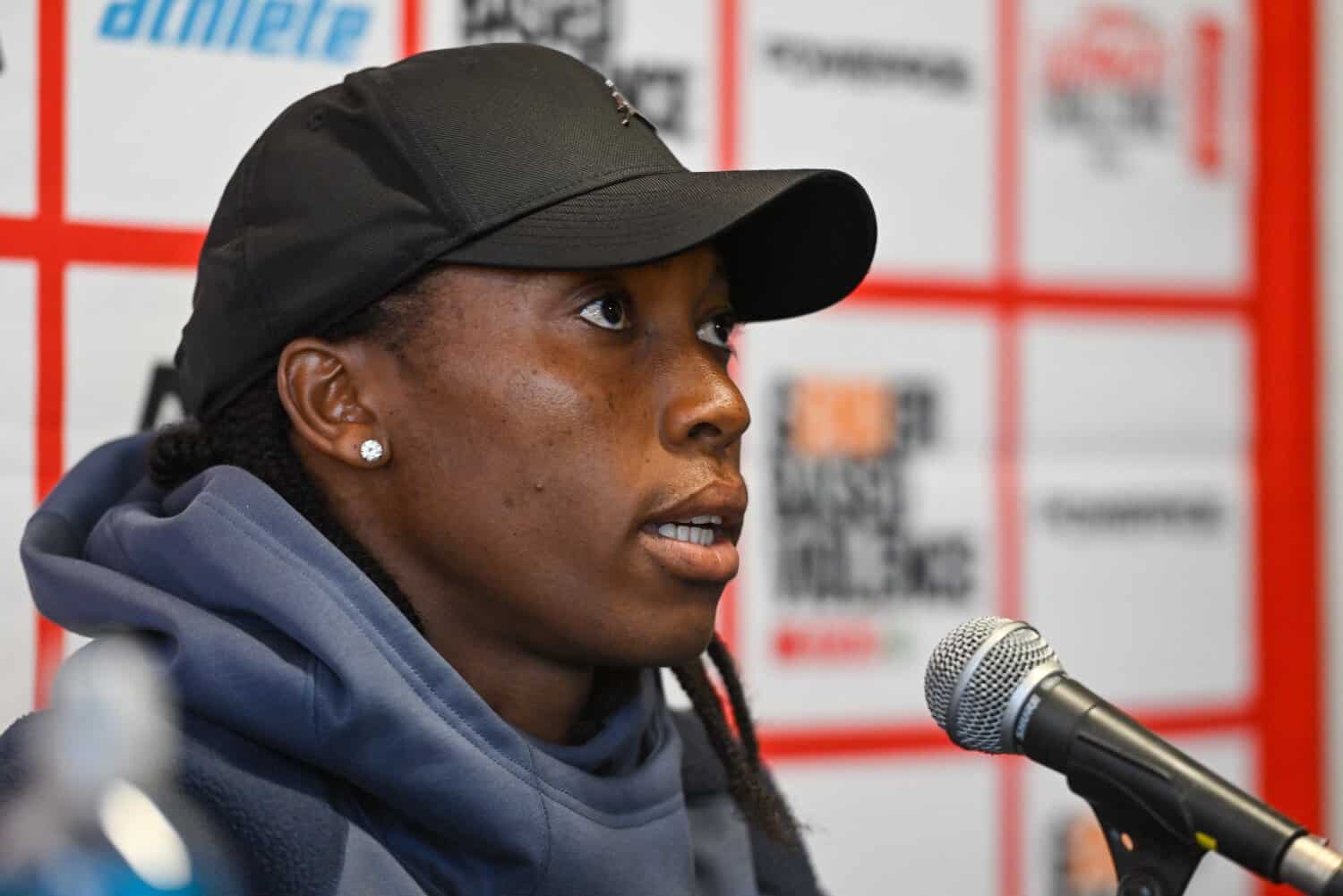
Semenya has called on the International Olympic Committee to release scientific data proving DSD athletes have an unfair advantage.
Former Olympic and world 800m champion Caster Semenya has lashed out at the International Olympic Committee (IOC), claiming its policy banning athletes with differences of sexual development (DSD) from competing in women’s sport is both “disrespectful” and “harmful”.
The IOC announced this week that women’s sports would be limited to biological females, determined on the basis of a one‑time SRY gene screening, which would force DSD and transgender athletes to compete in the men’s division.
The Olympic body said it had found there was at least a 10% advantage in most running and swimming events for men, rising beyond 100% for sports requiring “explosive power”.
‘Disrespectful towards women’
Semenya criticised the IOC, however, claiming this was “a lie” and calling on the organisation to release the scientific data to back up its claims.
“For you as a woman, why will you be tested to prove that you’re fit?” Semenya said yesterday
“You know, it’s like now we need to prove that we are worthy as women to take part in sports. That’s disrespectful towards women.”
Until the IOC could prove DSD athletes had a significant advantage, Semenya said the organisation was violating their rights.
“This affects women… and if you’re going to respect women’s dignity, then don’t question how they are,” Semenya said
“Accept them for who they are and accept them to take part in sports. Respect them and respect their dignity because we’re talking about human rights and diversity, and if you are an organisation like the IOC talking about diversity, then act like one.”
‘Causing harm’
Semenya said IOC president Kirsty Coventry, a former elite swimmer for Zimbabwe, was not considering the challenges African women had previously faced due to regulations which had been put in place by World Athletics. They included Semenya’s former 800m rivals Margaret Wambui of Kenya and Francine Niyonsaba of Burundi, who were also DSD athletes.
“For her (Coventry) being a woman coming from Africa, knowing how African women or women in the global south are affected by that, of course, it causes harm.”
While Semenya, 35, continues to participate in road races – she finished 12th at the Spar Grand Prix 10km event in Cape Town yesterday – she retired from competitive track athletics a few years ago after being sidelined from her specialist middle-distance events in 2019 when World Athletics enforced regulations preventing DSD athletes from competing against women without having treatment to reduce their natural testosterone levels.
Semenya previously had successfully fought to have World Athletics restrictions lifted temporarily after being banned earlier in her career, and though she continued her battle against the global athletics body in European courts after the 2019 rules were put in place, she had not succeeded in her attempt to have them overturned.
Support Local Journalism
Add The Citizen as a Preferred Source on Google and follow us on Google News to see more of our trusted reporting in Google News and Top Stories.
#IOC #causing #harm #disrespecting #women #Caster #Semenya