Arrests, Church Closures Raise Concerns Over Zimbabwe’s Constitutional Process
By Shelton Muchena| If the bill came from the people, why is ZANU PF taking the same bill for awareness to the same people?
And while some people are preparing to go to church tomorrow expecting an ordinary service, there is growing uncertainty about whether those doors will even be open.

In recent days, reports of gatherings being disrupted and individuals being questioned by police have created a tense atmosphere. For many, these developments do not feel isolated. They feel connected.
Zimbabwe is once again facing difficult questions about the state of its democracy. Reports that individuals opposed to Constitutional Amendment No. 3 are being arrested simply for meeting have caused alarm, particularly when placed alongside claims that the ruling party, ZANU-PF, continues to campaign freely. The alleged closure of churches, coupled with accusations that some of these same spaces are being used to advance political messaging, has deepened public unease.
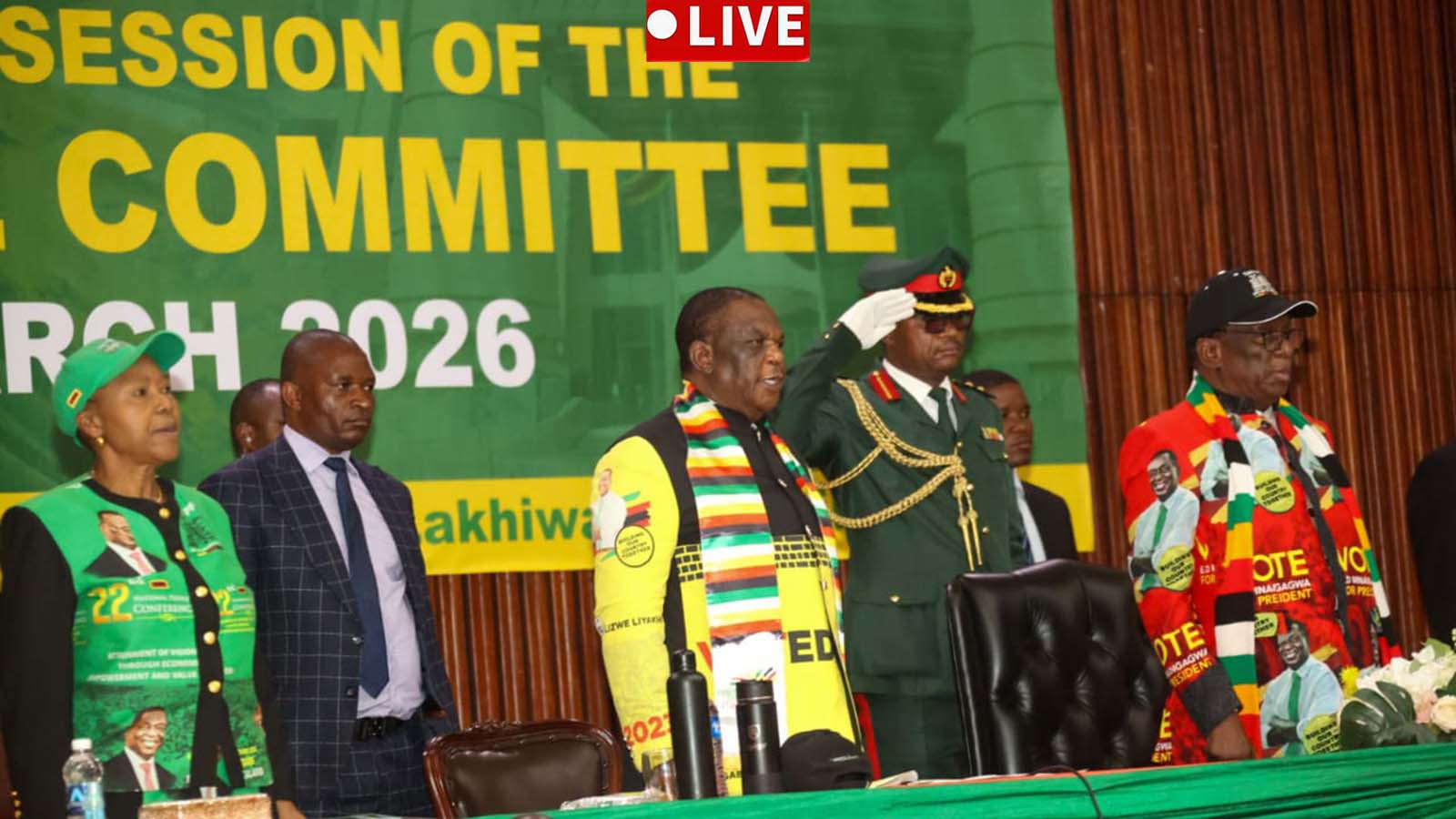
At the centre of this debate is President Emmerson Mnangagwa. His administration now faces growing scrutiny over whether the constitutional outreach process is being conducted in a manner that is fair, transparent, and inclusive. A process of this nature depends heavily on public confidence, and that confidence is difficult to sustain if sections of society feel excluded or intimidated.
Those critical of recent developments argue that the arrests and restrictions undermine the very idea of a national consultation. They point out that democracy is not only about reaching a decision, but about how that decision is reached. If one group is able to organise and campaign without hindrance while another faces barriers, the process risks being seen as uneven.
On the other hand, authorities may justify certain actions as necessary to maintain order. Zimbabwe has a history of political tensions, and officials often argue that unregulated gatherings can lead to instability. From that perspective, intervention is framed as a precaution rather than repression. Even so, the perception of selective enforcement remains a serious concern.
The involvement of churches adds another layer to the issue. Places of worship are widely regarded as neutral ground, spaces where people come together outside the pressures of politics. When access to these spaces is restricted or when they are drawn into political activity, it raises questions about the boundary between faith and state. Allegations involving figures such as Daniel Garwe have only intensified the discussion.
For many citizens, this is not simply about party politics. It is about fundamental freedoms. The right to meet, to speak openly, and to practise one’s religion are central to any democratic society. When these rights appear to be limited, even temporarily, it can create a climate of uncertainty and fear.
There is also a longer term risk. If people begin to feel that participating in public processes carries personal consequences, they may choose to stay away altogether. That kind of disengagement weakens democratic institutions over time, making it harder to build consensus or trust.
Zimbabwe’s situation is not without complexity. Political, historical, and social factors all shape the current moment, and any meaningful solution will require careful navigation of these realities. However, the principle remains clear. A constitutional process must be open to all, free from coercion, and seen to be fair by those it seeks to represent.
If there is genuine confidence in public support, it should be demonstrated through openness rather than control. The strength of any democracy lies in its ability to accommodate different views without resorting to pressure or exclusion.
What is happening now will have lasting implications, not only for the proposed amendment but for the broader democratic culture in Zimbabwe. The challenge is not just to complete the process, but to ensure that it is carried out in a way that respects the rights and voices of all citizens.
Related
#Arrests #Church #Closures #Raise #Concerns #Zimbabwes #Constitutional #Process #ZimEye