Zanu PF Big Wigs Fight Over Seized Land
By A Correspondent–A bitter power struggle has erupted within Zanu PF in Mashonaland West’s Zvimba district, where party officials are reportedly fighting over control of land acquired during Zimbabwe’s controversial land reform programme — exposing deepening factionalism and patronage battles within the ruling party.
At the centre of the dispute are allegations that Zvimba East MP Kudakwashe Manhanzva and Ward 25 Councillor Ruzai Muchaurawa are blocking the issuance of title deeds to farmers at Sunnyside Farm — formerly owned by white commercial farmer Sam Levi — while allegedly positioning themselves to control the land for private interests.
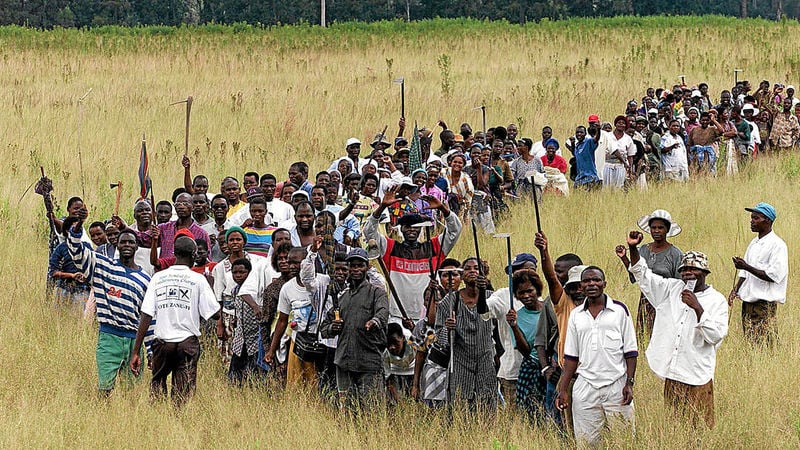
The affected areas include Sunnyside Central, Sunnyside A and parts of Royden, where hundreds of farmers — many of them war veterans and long-time Zanu PF supporters — hold offer letters but are being denied the final step of ownership through title deeds.
The dispute highlights long-standing contradictions in Zimbabwe’s land reform programme. Launched in the early 2000s under the Fast Track Land Reform Programme, the policy was framed as a corrective measure to colonial land dispossession. While it succeeded in redistributing land from white commercial farmers to black Zimbabweans, it has also been widely criticised for lack of tenure security, elite capture and political interference, with land often allocated along party lines or used as a tool of control.
In Zvimba, tensions escalated after a government-appointed surveyor was allegedly chased away by the MP and councillor in full view of farmers, with reports that no land-related activity would proceed without their approval.
Further allegations suggest that the two officials submitted a letter to the Ministry of Lands misrepresenting farmers’ positions — claiming they preferred smaller residential plots instead of title deeds — and attaching signatures allegedly collected under questionable circumstances.
Farmers say this move is linked to land development interests, with private developers reportedly eyeing the area for gated housing projects, raising concerns that productive agricultural land is being diverted for commercial gain.
The situation has also exposed how land administration remains heavily politicised. When farmers approached government offices seeking clarity, they were reportedly told that their case was “too political” and beyond administrative control, suggesting that decisions are being driven by powerful political actors rather than policy frameworks.
Attempts by farmers to escalate the matter to provincial and national authorities, including the Minister of Lands, have yielded little progress, while reports indicate that the issuance of title deeds has been halted on instructions from senior officials within the ministry.
The conflict underscores broader tensions within Zanu PF, where internal factional battles have increasingly played out through control of land and state resources. Since the military-assisted transition that brought President Emmerson Mnangagwa to power in 2017, analysts have noted growing divisions within the ruling party, with loyalty often determining access to land, contracts and economic opportunities.
Critics argue that individuals perceived to be outside dominant factions — or those resisting local political authority — risk marginalisation or exclusion from key programmes, including land allocation and formalisation.
In this case, even beneficiaries of the land reform programme — many of them liberation war veterans — now find themselves caught in a struggle not against former colonial landowners, but within the ruling party itself.
Observers say the developments in Zvimba reflect a broader shift, where land — once framed as a symbol of liberation and redistribution — has increasingly become a site of internal contestation, accumulation and political control.
For the affected farmers, the delay in issuing title deeds not only threatens their security of tenure but also undermines their ability to invest, access financing and fully utilise the land.
As tensions continue to simmer, the unfolding dispute raises critical questions about the future of Zimbabwe’s land reform — and whether it can move beyond political control towards a transparent and equitable system.
For now, what was once presented as a revolution of land justice is increasingly resembling a battle of interests — where, as some farmers put it, it has become a case of “dog eat dog.”
Related
#Zanu #Big #Wigs #Fight #Seized #Land #ZimEye