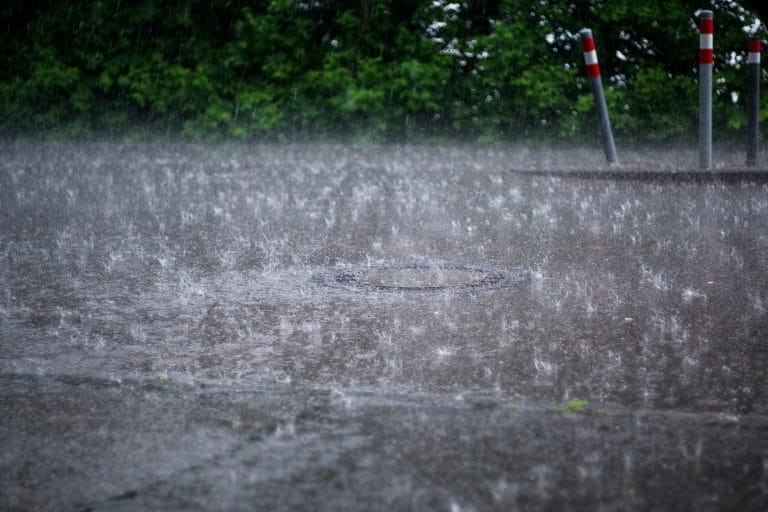
A small research team at Boston University has developed a deep learning model that outperforms state-of-the-art European weather prediction systems in forecasting rainfall in tropical West Africa — a region where unreliable forecasts have long hampered farmers, water managers and disaster response teams.
Led by Yves Atchadé, a professor of mathematics, statistics and computing and data sciences, the team focused on Ghana as a case study, using satellite rainfall data from NASA and Japan’s Global Precipitation Measurement mission alongside the ERA5 atmospheric dataset from the European Centre for Medium-Range Weather Forecasts.
The resulting model predicts 24-hour rainfall totals 12 to 30 hours in advance. In testing, it outperformed the European center’s own forecasts in matching observed rainfall and identifying heavy rain events — despite being significantly smaller and computationally lighter.
“We wanted to show that a small team, with a small model, could still match or even beat the state of the art,” Atchadé said.
To guard against the risk of the model simply memorizing historical weather patterns rather than learning meaningful physical relationships, the team used statistical regularization and careful validation. They then cross-checked what the model learned against established scientific understanding of rainfall formation in the region. “A lot of interesting phenomena were captured by the model,” Atchadé said, including the role of humidity, wind patterns and large-scale atmospheric wave features as predictors of rainfall.
Atchadé said the practical implications extend well beyond academia. “In many African countries, people still rely on predictions from Europe, not from their own institutions,” he said. “If local researchers can build models that match or surpass those, it’s a way to train local scientists and to give farmers better information for planting and harvesting.”
The model communicates uncertainty through ensemble modeling — running multiple simulations to map out a range of possible outcomes — so that output is framed in terms of risk and actionable scenarios rather than technical detail. “Farmers want to know: is it likely to rain in the next two days, or is there a real chance of a heavy downpour that could flood my fields?” Atchadé said.
The team’s next focus is predicting the West African monsoon months in advance — a far more consequential forecast for the region’s farmers. “For farmers, it is perhaps the most important prediction we can make,” Atchadé said, noting that a credible forecast issued in March or April about the timing of the monsoon would be far more useful than a day-ahead rainfall figure.
#Boston #University #Team #Builds #Rainfall #Model #West #Africa #Outperforms #European #Forecasts