US$400 Million Minerals Revenue Disappears
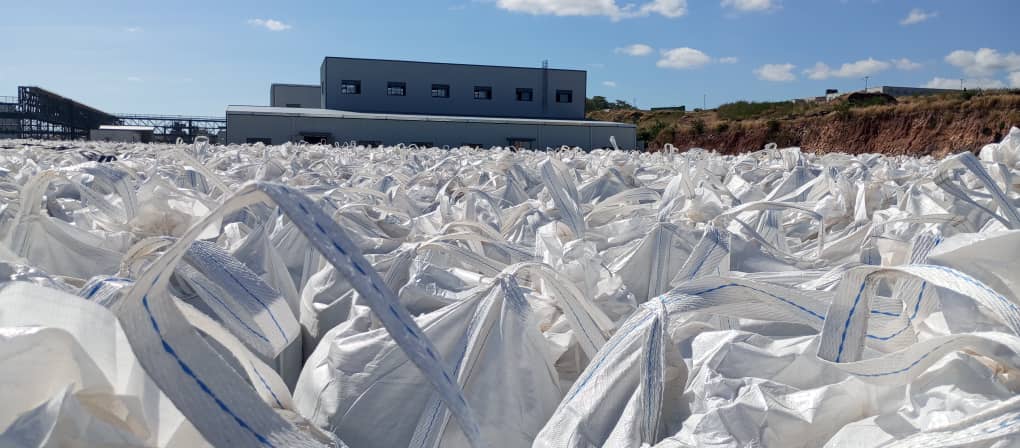
By Business Reporter-Zimbabwe has reportedly lost an estimated US$400 million in potential revenue through the export of undeclared caesium and tantalum—high-value by-products smuggled out of the country concealed within lithium concentrates—before authorities moved to ban the export of raw minerals.
The revelations, made by Engineer Mudono, a lecturer at the National University of Science and Technology, underscore deep-seated leakages in Zimbabwe’s extractive sector, long plagued by opacity, elite capture, and weak regulatory oversight.
Speaking at a breakfast meeting organised by the Zimbabwe Environmental Law Association (ZELA), Mudono detailed how critical minerals were being exported without proper declaration or beneficiation.
“If I use that as the basis of calculation, then I have a general approximation of the content within the concentrate. For caesium, 0.07 to 1.05 percent… that translates to around 8,512 metric tonnes from 1.52 million tonnes exported—worth about US$30 million,” he said.
“Then you go to tantalum… from that aspect, around US$400 million is what is within the content.”
The latest disclosure adds to a long history of suspected revenue leakages in Zimbabwe’s mining sector, where allegations of corruption and elite-driven extraction deals have persisted for decades.
In 2016, former President Robert Mugabe stunned the nation by revealing that Zimbabwe had lost an estimated US$15 billion in diamond revenue from the Marange fields—an admission that exposed the scale of illicit financial flows and shadowy dealings involving politically connected elites and security-linked companies.
More recently, the explosive documentary series Gold Mafia laid bare how politically exposed persons, business elites, and international networks allegedly use Zimbabwe’s gold sector to launder money and siphon wealth. The investigation pointed to a nexus between gold smugglers, government officials, and financial institutions, raising questions about the integrity of the country’s mineral governance systems.
Concerns have also been raised about the growing concentration of control over the gold sector among politically connected individuals, including associates and family members linked to President Emmerson Mnangagwa. Critics argue that such concentration fuels a parallel economy where gold is diverted through informal channels, depriving the Treasury of much-needed foreign currency.
This pattern—where politically exposed elites dominate extraction, trading, and export chains—has entrenched a system in which mineral wealth benefits a narrow few, while the broader population sees little return.
Against this backdrop, Mudono has called for a decisive shift from exporting raw mineral concentrates to full-scale beneficiation—processing minerals locally to maximise value and plug revenue leakages.
His findings lend empirical weight to the government’s decision to ban raw lithium exports on 25 February 2026, a move aimed at curbing smuggling and ensuring that Zimbabwe captures greater value from its vast mineral resources.
However, analysts argue that policy shifts alone are insufficient without transparency, strong institutions, and political will to dismantle entrenched patronage networks that continue to define Zimbabwe’s extractive industries.
The US$400 million loss is not an isolated incident but part of a broader, long-standing pattern of resource leakage—where weak oversight, corruption, and elite control continue to drain Zimbabwe’s mineral wealth.
Related
#US400 #Million #Minerals #Revenue #Disappears #ZimEye