The U.S.-Iran war cast a long shadow over the International Monetary Fund and World Bank Spring Meetings in Washington, threatening what economists described as sub-Saharan Africa’s hard-won economic gains — but experts on the sidelines of the gatherings urged African governments not to slow their investments in artificial intelligence.
Economic activity accelerated broadly across sub-Saharan Africa in 2025, with regional growth estimated at 4.5%, according to the IMF’s regional economic outlook. Economists from the fund’s Africa department urged governments to tighten fiscal policy and direct spending toward critical areas including clean energy and humanitarian aid.
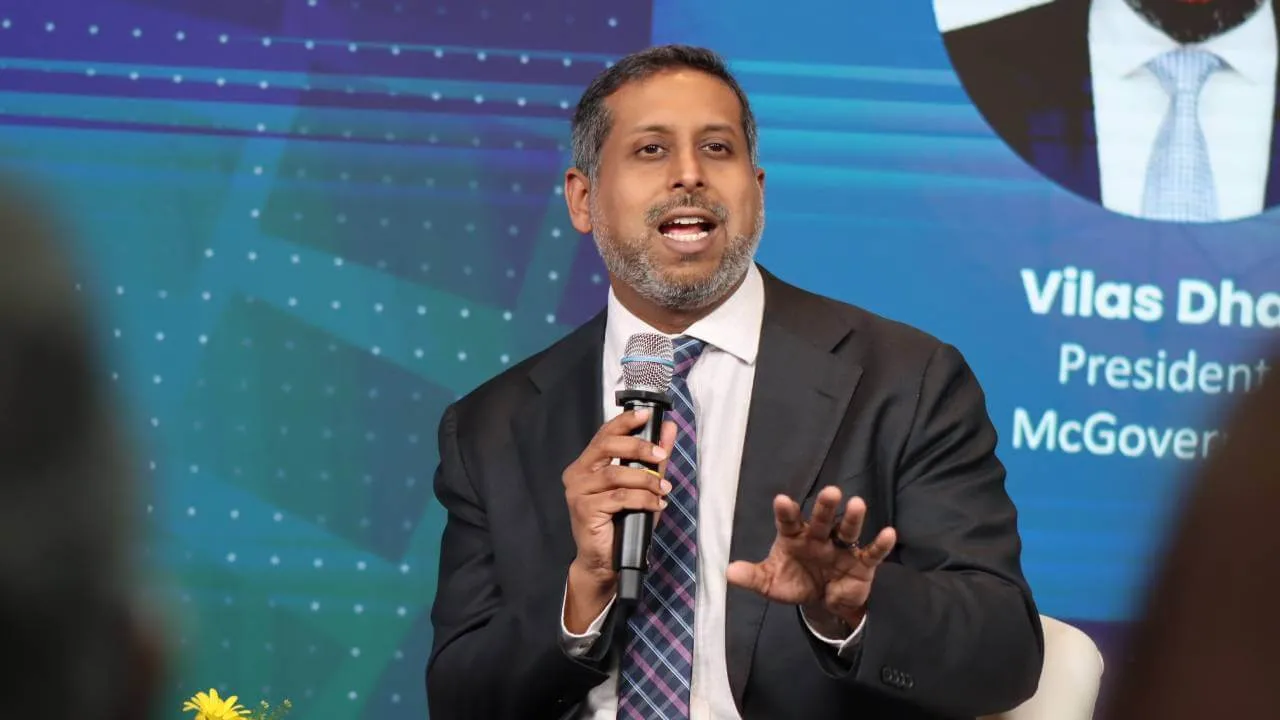
But at an IMF panel on scaling AI for development under real-world constraints, Vilas Dhar, president and trustee of the Patrick J. McGovern Foundation, offered a more optimistic message. “Africa is one of the places that gives me the most optimism about what AI will look like for the world,” he said. “I think AI is more a story about the transfer of power than any other technological intervention we’ve had in the last 80 years.”
The IMF’s outlook report acknowledged AI’s potential but found that sub-Saharan Africa has not yet demonstrated AI readiness, with usage uneven and below that of other developing economies on average. The fund attributed this to gaps in infrastructure, skills and governance capacity, while noting that “not ready is not the same as not capable.” It called for a bold reform agenda to enable broader AI-driven growth.
Dhar said conversations he has had in Africa have moved beyond which products to buy, toward a more fundamental question: “How do we create a wholesale reconstruction of systems around health access, around agricultural production, around energy placement and utilization?”
Lawrence Eta, former chief technology officer for the City of Toronto, said Africa must move forward with its AI strategy to avoid entrenching technological dependence. “Africa cannot afford to remain a consumer of technology built elsewhere and governed by others. AI is not optional for Africa; it is the digital infrastructure,” he said, arguing that AI would allow the continent to strengthen healthcare delivery, food systems and energy resilience while moving beyond legacy constraints.
Eta warned that pulling back from AI investment would be the wrong response to the economic disruptions created by the Iran conflict. “The African countries that direct their digital transformation towards AI as a social, economic and sustainable foundation now will emerge from geopolitical disruption with sovereign capacity,” he said.
Dhar echoed that view, saying Africa’s continued investment in AI would help break a long-standing dependence on external development assistance “in a way that’s deeply equity- and justice-oriented.”
#IMF #Spring #Meetings #Experts #Urge #Africa #Press #Ahead #Investment #Global #Shocks