There is a rising pan-African awareness that unless the continent unites, Africa’s resources will continue to be exploited by the marauding forces of globalisation.
This new trend, unlike the 1800s scramble for Africa, when the European nations decided to slice up the continent for their own colonial benefit at the Berlin Conference, sees the West now competing with the Chinese in the scramble for African resources.
The unity of Africa is sacrosanct if Africans are to overcome the continued economic subordination of the continent to outside interests.
This has been a rallying point expressed by political movements like the EFF. The same political sentiments have been echoed across a number of platforms by opinion makers like Prof PLO Lumumba of Kenya in many of his public lectures and Dr Arikana Chihombori, who have both called for the unity of Africans on the continent and in the diaspora.
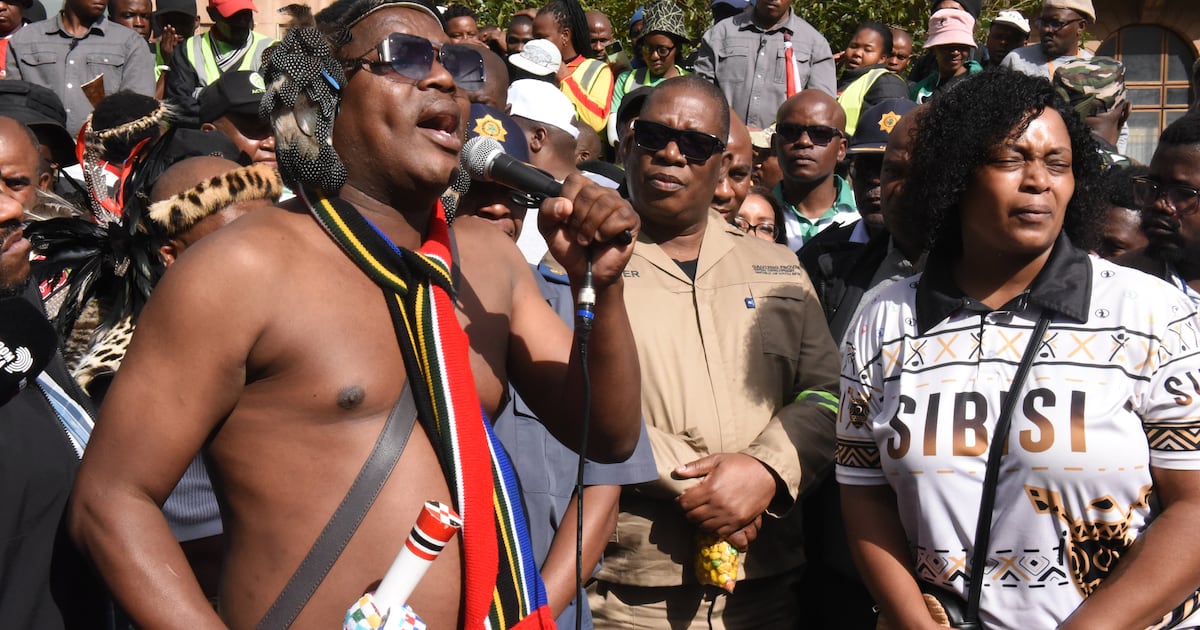
However, these calls now seem to be drowning in tribal rhetoric, given the recent developments in SA of xenophobic attacks on African migrants, inspired and engineered largely by Zulu nationalists.
Perhaps it is important for one to put into historical perspective the role played by this naïve and myopic Zulu nationalism, which, like the rise of the Afrikaner nationalist Broederbond organisation, has throughout history been costly in both human lives and political developments.
The derailment of the noble African political objective of pan-Africanism is not a new phenomenon by these reactionary forces.
Recall what happened before South Africa’s hard-earned democratic breakthrough in 1994.
The process was nearly derailed by the intransigent forces of Zulu nationalism organised under the political auspices of the IFP.
It was only after last-ditch negotiations that Nelson Mandela and FW de Klerk managed to persuade the then IFP leader, Mangosuthu Buthelezi, to participate in the first democratic elections.
The IFP went and won KwaZulu-Natal amid allegations of ballot box stuffing in and around certain townships in the province.
It was a political hurdle that SA had to cross through the spirit of reconciliation and nation-building by Mandela. The situation could have led to the call to recount ballot papers or a rerunning of the elections, but this was avoided due to political volatility.
Despite those challenges, SA’s new democratic era dawned and led to the consolidation of Mandela’s project of nation-building and reconciliation. That period was succeeded by Thabo Mbeki’s era that heralded the call for an African renaissance.
African peer-review mechanism
This call introduced the African peer-review mechanism that sought to provide African solutions to African problems. It was a visionary posture for the continent driven by Mbeki and his counterparts on the continent.
Colonel Muammar Gaddafi of Libya proposed the formation of Africa as a unitary state with one army and one currency, but that idea, which was gaining momentum under Mbeki’s leadership, came to an abrupt end following Gaddafi’s assassination.
The Jacob Zuma era — propelled by Zulu nationalism — not only displaced the African renaissance agenda but also ushered in corruption on a scale unprecedented since the democratic dispensation, and SA is reeling from the effects.
This pattern of narrow self-serving tribal interest reminds one that when the European colonial forces and Afrikaners trekked from the Cape into the interior of Southern Africa, they found kingdoms weakened by the Difaqane/Mfecane wars caused by Shaka Zulu.
In a similar fashion, the recent xenophobic attacks are likely to weaken the rise of pan-Africanism while feeding into the notion of white supremacy.
The proponents of white supremacy, who throughout history have sought to subordinate African interests to those of the West, can only thrive as a dominant view within this current context of xenophobic attacks on African migrants in SA.
• Molapo is the author of The Child of South Africa’s Labour Reserves. He works for the Lesotho Highlands Development Authority and writes in his personal capacity.
#BEN #MOLAPO #Myopic #naive #Zulu #nationalism #threatens #panAfrican #agenda